South · US

Meth Lab Cleanup in Washington, DC: Co-ops, Alley ADUs, and DOEE Residue Files

Planning meth lab cleanup in Washington, DC

DC meth residue files use DOEE and DC Health context plus a wipe pass level for each address. We never invent a District-wide microgram clearance rule. This is planning guidance, not a claim of a local office or crew in Washington.

Get an email reply about meth lab cleanup

Send a short message to the follow-up inbox. A coordinator can reply by email. This form does not send emergency help; call 911 first if anyone is in danger.

Tell us what you need help with. Share a short description; please leave out medical details, access codes, and other sensitive information.

A request does not confirm a booking. For immediate danger, contact local emergency services.

Or email info@prompartybuses.com

Direct answer

The short answer for Washington, DC

In the District, meth residue plans for Capitol Hill co-ops, Northwest condo boards, and alley dwellings go forward without a made-up citywide meth law for moving back in. A sound DC resale or re-rental file draws on several pieces. These include DC Health questions, DOEE hazardous waste context, and EPA voluntary guidance on the order of work. An address-specific pass level rounds them out. Invented micrograms have no place in them.

Editorial guide · Biohazard Remediation NetworkUpdated 2026-07-22Location focus: Washington, DC

Local planning context

Co-op shares on Capitol Hill, owned units in Northwest towers, and alley dwellings each handle paperwork their own way. Yet the chemical problem is the same. Residue often turns up when a co-op board asks for environmental papers partway through a transfer. A buyer's inspector may find smoking debris in an alley unit. Or police may release a flat that held process chemicals. This guide does not invent a District-wide numeric meth law for moving back in. Owners, boards, and buyers should tie a written pass level to the address. Include any board letter or contract clause. Do not market a made-up "DC clearance number."

DC Health is the public health contact once a scene is stable. The Department of Energy and Environment (DOEE) covers hazardous waste and environmental questions when tainted materials leave the lot. DEA guides on secret labs explain the hazards of cooking. Signs of cooking widen the waste review. Think solvent cans and etched glassware. Stained plumbing counts too. Smoking alone still soaks plaster lath, upholstery, and dust in wall heat-and-cool units (PTACs). This happens in tightly closed row house rooms. Stacked trash rooms and narrow alleys make uncovered bag-outs a real problem for neighbors, not a small courtesy.

Closings here lean hard on paperwork. Lenders and boards ask for mapped lab PDFs even though no District microgram law exists. Keep notes on cooking versus use honest. Then lawyers can weigh disclosure wording against measured conditions, not smell.

Property considerations

Confirm the type of ownership first: co-op share, condo unit, or owned row house. Do this before drafting board or closing packets.

Write a wipe pass level for this address, since this page cites no District-wide numeric meth law for moving back in.

Add alley dwellings and basement rooms to the test map if paths between spaces were open while the unit sat empty.

Plan to throw out carpet, pad, and soft furniture when wipe data show buildup on plaster-era surfaces.

Book freight elevators or alley curb times and use sealed containers, so lobby dust does not coat cleaned units again.

Keep process chemical evidence apart from smoking foils so the waste review lines up with DOEE.

Response-planning framework

Board authority, hazmat release, and drafting the pass level

Find out who controls access. That may be a co-op board, a condo association, or the owner of a row house. EPA voluntary guidelines can suggest a sensible order of steps. State that the pass level is written for this address and is not a District microgram law. Record signs of cooking versus smoking before tear-out begins.

Sealing off alleys and building cores and sorting soft goods

Seal the work unit off from neighbors across the shared wall. Bag soft goods before they go into alleys or passenger elevators. Do not dry sweep into shared trash rooms. Any waste carrying chemicals gets a review before it exits DC.

Controls for PTACs, trash rooms, and shared walls

Cap trash room and chase openings that tie stacked flats together. Clean carts before they roll through lobbies. In District row houses and co-ops, the crew's breathing protection should match the solvent and dust hazards. After washing, residue that travels through stacked building cores is a common reason later wipes fail the job's written goal.

Building the resale and board packet

Include the chain-of-custody forms. Each one shows, with signatures, who held a District sample. Add mapped lab PDFs, waste records, and photos of alley or elevator staging. Include a written account of cooking versus use. Explain that the results describe this property. No District-wide meth microgram rule exists to comply with. Retest failed spots. Store the packet with the co-op transfer or condo resale papers. A bill for fragrance is not a clearance.

Documentation checklist

  1. 1Notes on approval from the co-op board, condo association, or owner
  2. 2Hazmat or fire department release notes for the District site
  3. 3Written test plan and pass-level statement for the District unit
  4. 4Floor plan wipe map, including the alley dwelling or basement if they are part of the job
  5. 5Notes on PTAC filters and how the trash room was sealed off

Official resources

Questions for this location

Is there a District numeric meth wipe standard for co-ops and condo units?

This page does not invent a District of Columbia numeric meth law for moving back in. EPA voluntary guidelines are technical advice. They set no federal microgram value for co-op flats, condo towers, or alley dwellings. Co-op boards and owners need to put the pass level into a written plan. Board-ready plans cite an accredited lab, map each sample, and state detection limits. Then save any board letter or contract clause that sets a bar for this property. Ads must not invent a "DC number." Keep the lab file so transfer lawyers can see what was measured.
How do co-op board packets differ from files for owned homes?

Co-op transfers often send environmental questions to board lawyers and managing agents. They want mapped lab PDFs before they approve the share. Sales of owned homes may focus more on the buyer's review and the lender's checks. Either way, having no District microgram law does not excuse an empty file. Include notes on cooking versus use, chain-of-custody forms, and waste records. Ask a District lawyer about disclosure wording for your type of ownership. Files that only mention ozone delay closings, whether the home is a share or a deed.

Should an alley dwelling be tested apart from the main row house?

Often, yes. Alley units can hold heavier use or cooking evidence while soft goods move through the main house. The plan should say in writing why each space is in or out. This matters most if doors between spaces stayed open while the home sat empty. Photograph the connections before cleanup begins. Early row house samples may find nothing, and the alley unit's paths may have been closed. Then the job can be smaller. Open paths mean more testing.

When should DOEE or hazmat lead instead of residue washing?

In the District, residue washing and move-in testing come later. They start only after the space is safe and released. When the phases blur, people end up wiping walls with dangerous chemicals still on site. Store the chemical-removal shipping records beside the later wipe reports. Then the property's full history is clear.

Why do trash rooms and passenger elevators matter during cleanup?

Tainted soft goods and tear-out dust can spread to lobbies and other floors. This happens when they move uncovered through passenger elevators or open trash rooms. In a District co-op, that spread can make the unit's wipes fail. It can also start disputes with neighbors on the same floor. Take photos of how the core was protected. Skipped planning is a common reason a "cleaned" District apartment shows residue on later testing.

How should DC row house owners handle an English basement rental?

Many District row houses have English basement apartments with their own entrances. But they often share ducts, water heaters, or laundry with the floors above. If residue is found downstairs, test the main house too. Focus near shared returns and the inside stair. If the problem is upstairs, check the basement. Keep the tenant informed in writing. Talk about short-term housing if needed. Separate results for each unit make future leases and sales clearer.

Does Washington summer humidity affect cleanup?

Washington summers are hot and humid. Row houses with older windows and little air conditioning can be hard on crews in protective gear. Schedule heavy work early in the day and plan regular water breaks. Humidity slows drying after washing, so allow extra time before final wipes. Do not open windows to speed drying when neighbors are close. Use dehumidifiers instead. Plan debris removal around afternoon thunderstorms.

Contact

Get help by email

Send a short message for an email reply about meth lab cleanup planning questions for the Washington DC area.

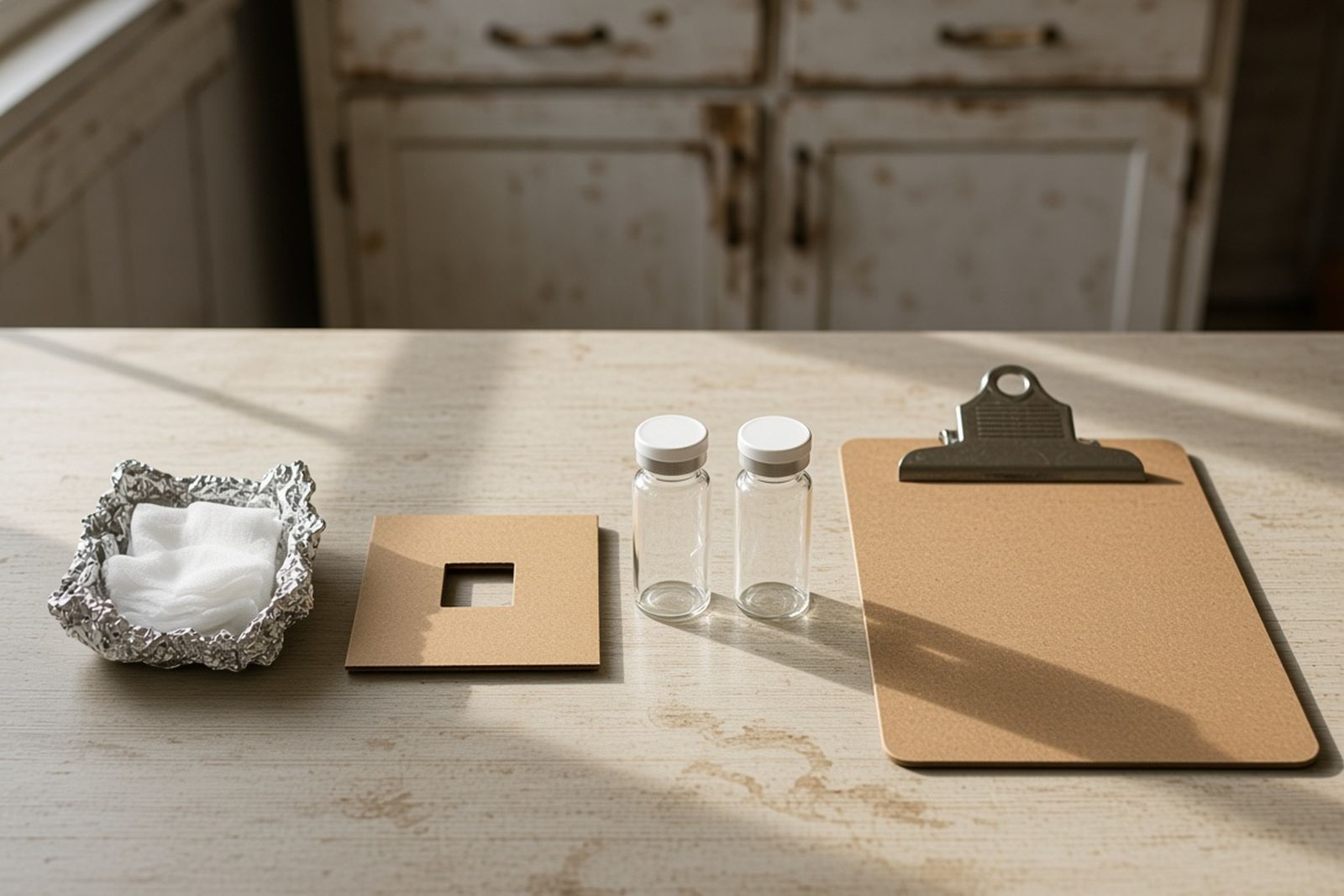
Wipe-sampling supplies on a counter: gauze in foil, a sampling template, vials and a clipboard
Illustrative photo, not a job record. Wipe-sampling supplies on a counter: gauze in foil, a sampling template, vials and a clipboard.
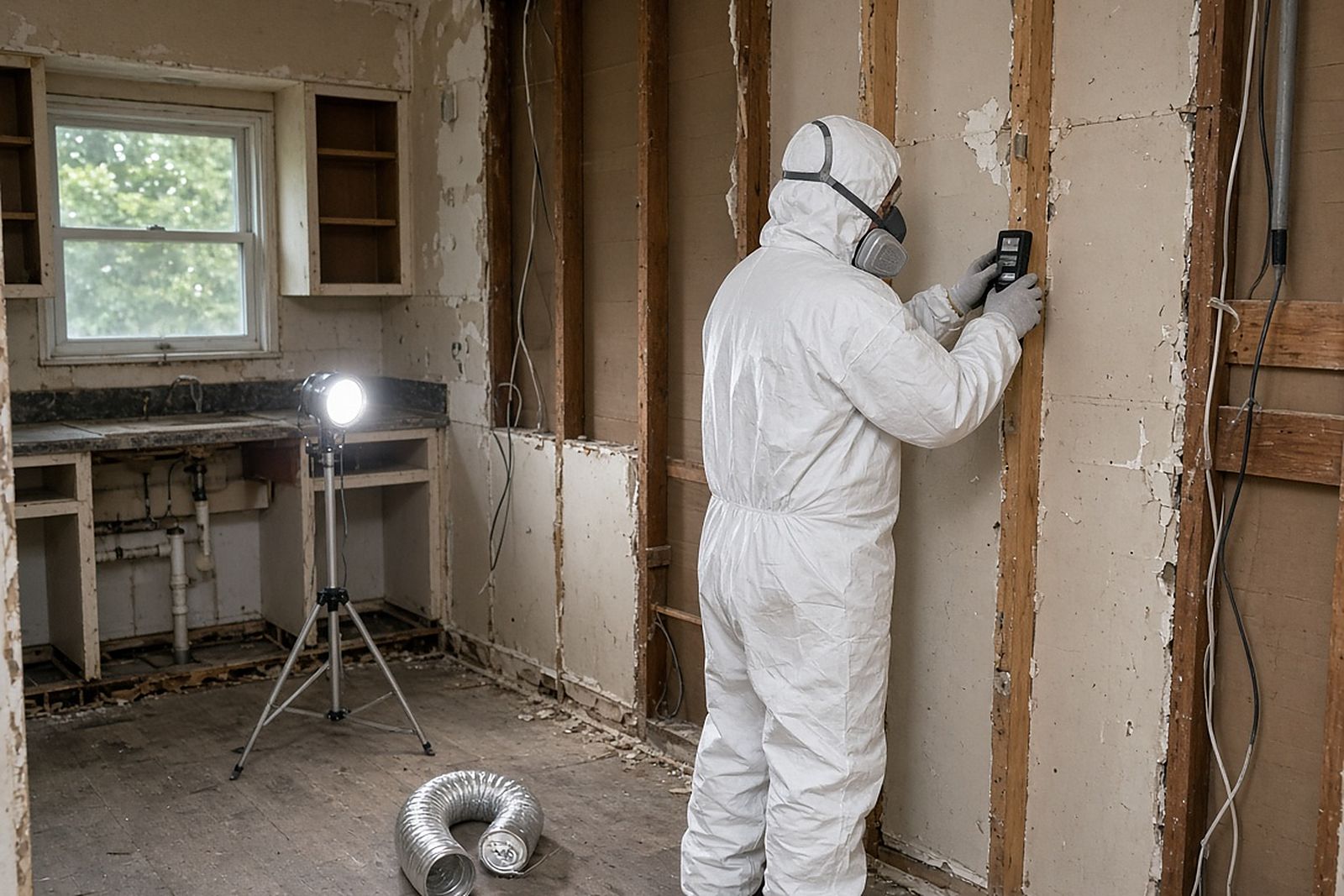
Technician in a respirator checking exposed studs in a gutted kitchen with a work light and duct
Illustrative photo, not a job record. Technician in a respirator checking exposed studs in a gutted kitchen with a work light and duct.

Meth Lab Cleanup figures to keep in mind

National and research figures, not Washington data. Local conditions, rules and providers vary; use these for scale and context only.

460 pg/mg

In that Victoria case, the 7-year-old child's hair contained 460 pg/mg of methamphetamine, versus 17 pg/mg for the mother and 5 pg/mg for the father.

Read with care: Case report; hair levels reflect exposure but not a specific dose-response.

Source: CDC MMWR (2016)Family of five, hair sampled one week after vacating

1.5 µg/100 cm²

Washington State's methamphetamine decontamination standard is 1.5 µg per 100 cm², which the state says was based on negative health effects found in people.

Read with care: Washington's limit is 15 times higher than the 0.1 µg standard used in several other states.

Source: Washington State Department of Health (2025)Washington State regulation

$6,500 per 1,000 sq ft + $1,400

Ohio's health department reports Oregon experience showing average meth lab cleanup costs of $6,500 per 1,000 square feet plus a $1,400 up-front assessment.

Read with care: Costs are a decade old and vary widely with contamination level and building materials.

Source: Ohio Department of Health (2016)Oregon cleanup experience as summarized by Ohio, document updated June 2016

These figures are public research and agency data, not this network's own job records. Keep each number with its population, year and limits; none of them predicts cost, timing or outcome at a specific property.

Plan before you reach out

Use the first 24 hours planner for immediate steps and the provider vetting checklist to confirm any Washington provider's training, insurance and waste path in writing.

What research has found

Findings from published studies of people and properties in situations like this one. They describe what researchers observed in a specific group; they are not predictions for your case.

Ceiling insulation contained methamphetamine.
Who was studied: One Australian home with suspected former manufacture, sampled more than five years later.Limits: One property; no general prevalence or current clearance threshold inferred.Contamination of Homes with Methamphetamine: Is Wipe Sampling Adequate to Determine Risk? (2019)
Commercial sorption tubes and laboratory methods successfully measured airborne methamphetamine.
Who was studied: Air sampling and contaminated-material experiments involving two properties.Limits: Limited properties and experimental conditions; modelled exposure is not observed illness.Current practices underestimate environmental exposures to methamphetamine: inhalation e… (2021)

Meth Lab Cleanup community polls

Poll results

Every count is a real visitor vote; nothing is seeded or padded. One vote per poll per device, and you can change your answer.

Your experience

If a house you wanted had a documented lab cleanup that passed clearance, what would you most likely do?

No visitor votes yet
Industry

Which factor would you weigh most when choosing a meth cleanup contractor?

No visitor votes yet

Planning cleanup in Washington?

Send a short message about the property to the follow-up inbox. A coordinator can reply by email with next steps.

Your request is sent to the follow-up inbox. A coordinator can reply by email.

If anyone is hurt or in danger, call 911 first.