Meth Lab Cleanup Cost: What Drives the Final Price
How testing, tear-out, and final clearance tests shape a meth cleanup budget
Finding out a property was used to make or heavily smoke meth is stressful. The first estimate can be hard to understand. This kind of cleanup is priced around testing, removing materials, washing, and proof the home passed. It is not priced like normal cleaning. This guide explains each cost, what makes the range wider, and how to compare quotes with confidence.
Get an email reply about meth lab cleanup
Send a short message to the follow-up inbox. A coordinator can reply by email. This form does not send emergency help; call 911 first if anyone is in danger.
What published figures say about cost
- NZ$10,300 to NZ$3,500
After New Zealand raised its residential meth contamination threshold in 2018, average tenancy-tribunal remediation awards fell from NZ$10,300 to NZ$3,500.
Read with care: New Zealand costs and legal context differ from the US.
Source: Journal of the Royal Society of New Zealand (2023)195 tribunal orders after 2018 vs 685 before, New Zealand
- 1,814
Eye and Face Protection (1926.102) drew 1,814 OSHA citations in fiscal 2024, ninth on the most-cited list.
Read with care: Construction-standard citation; general industry PPE cited separately.
Source: OSHA (via Safety+Health) (2024)United States federal OSHA citations, FY2024
- 8 hours annually
Workers covered by HAZWOPER must receive eight hours of refresher training every year.
Read with care: Refresher may be shorter if combined with documented equivalent training.
Source: OSHA (2024)United States, 1910.120(e)(8)
- $4,000
Biohazard cleanup nationally averages about $4,000, with a typical range of $3,000 to $5,000 and extremes from $1,500 to $25,000, per Fixr's January 2025 guide.
Read with care: Fixr figures are editorial cost estimates compiled from contractor and industry data, not a statistical survey of completed jobs; local prices vary widely.
Source: Fixr (2025)United States, residential biohazard cleanup, estimates as of January 2025
- 34,625
Federal OSHA conducted 34,625 inspections in fiscal 2024, split between 17,455 unprogrammed and 17,170 programmed inspections.
Read with care: Excludes inspections by the 22 state plans covering private employers.
Source: OSHA (2024)United States federal OSHA, FY2024
- 180 days
Facilities generating more than 100 kg but less than 1,000 kg of hazardous waste per month are Small Quantity Generators and may store it up to 180 days.
Read with care: Limit extends to 270 days when the disposal facility is over 200 miles away.
Source: EPA (2024)United States, RCRA generators
These figures are public research and agency data, not this network's own job records. Keep each number with its population, year and limits; none of them predicts cost, timing or outcome at a specific property.
What does a meth lab cleanup quote actually cover?
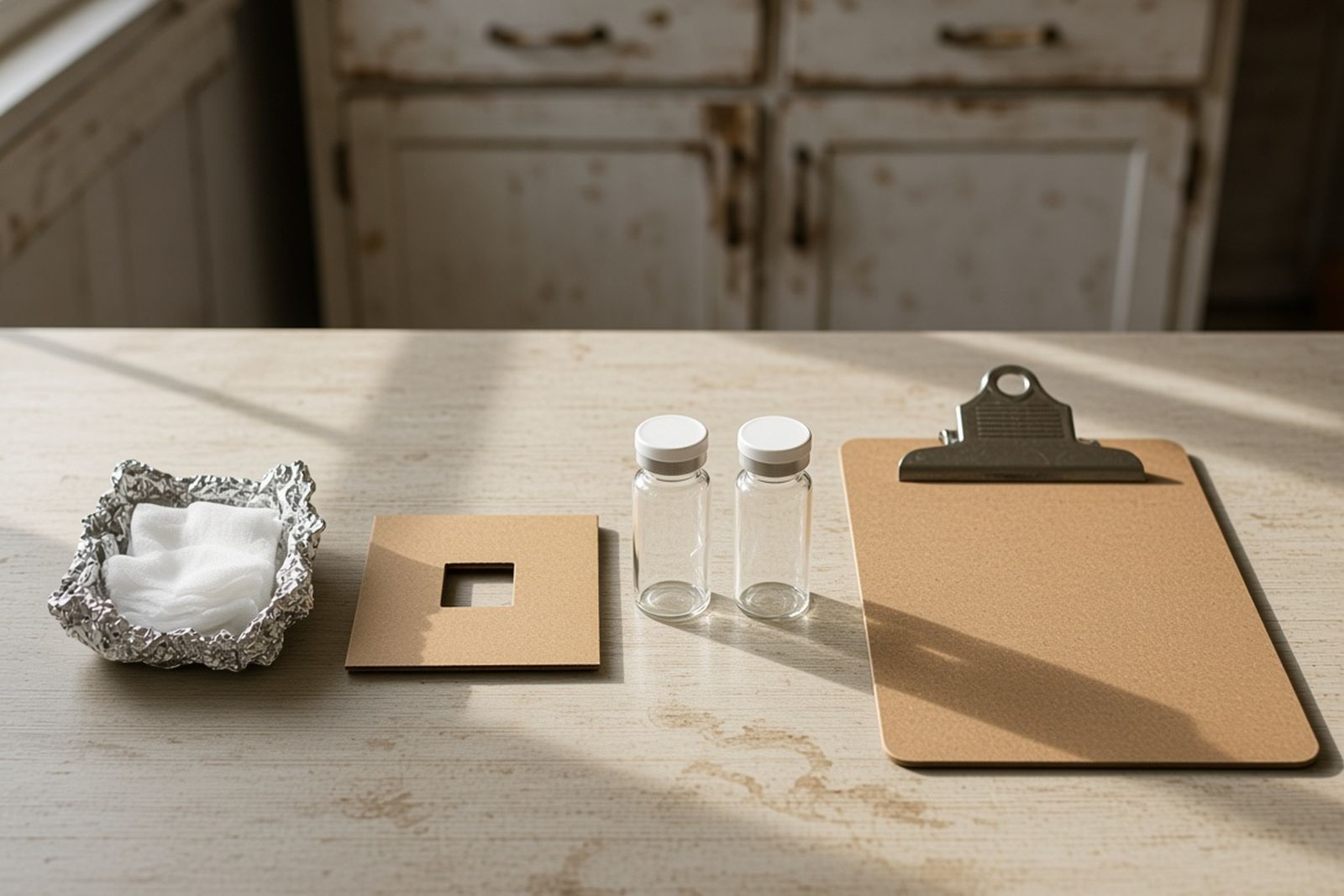
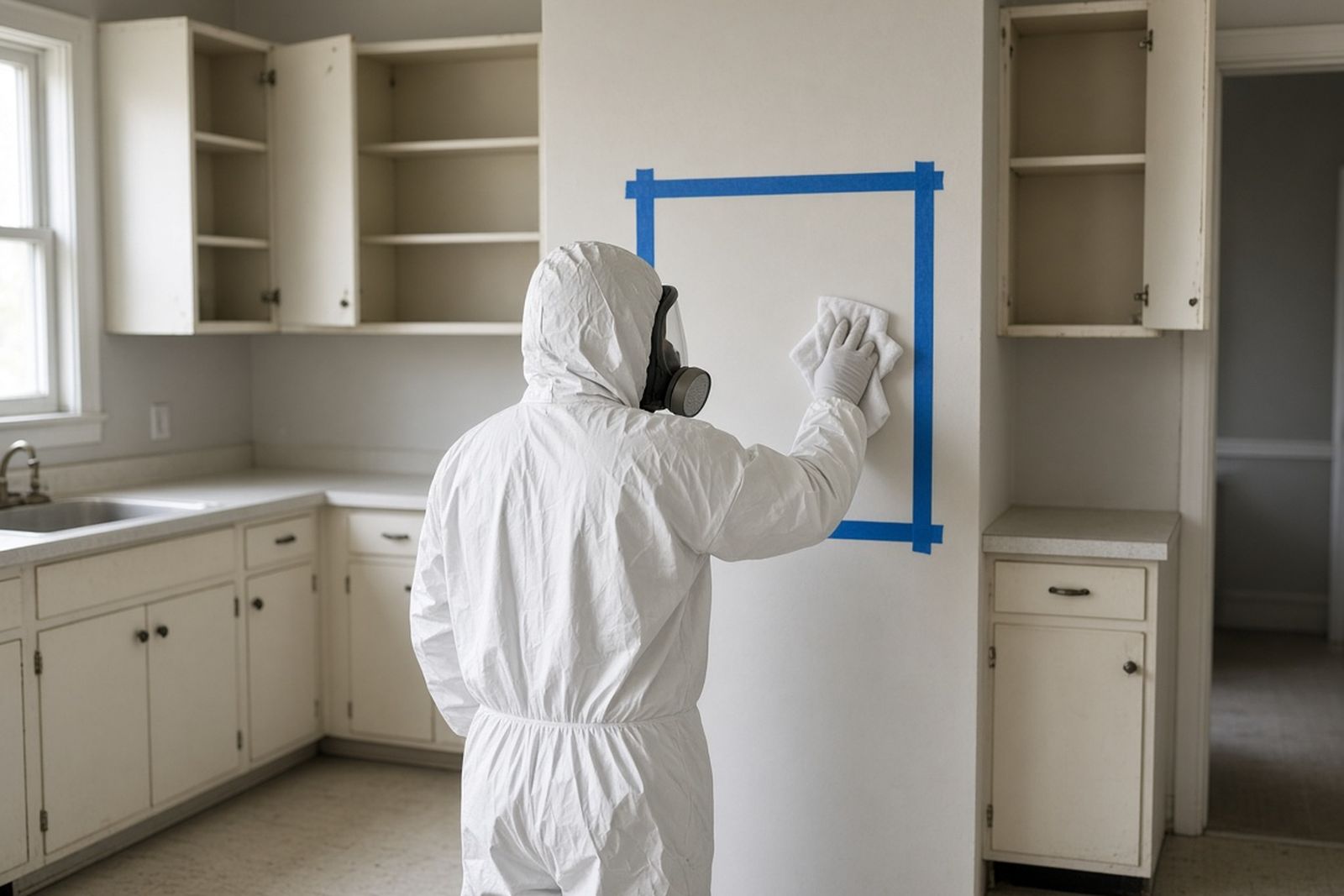
Most jobs move through clear steps, and each step has its own charges. First comes an assessment. Someone records the property's condition and looks for leftover chemicals or equipment. They wipe surfaces in different rooms and send the samples to a lab to measure residue. The results shape everything after that. So this step is often billed on its own. In some places, it must be done by someone who does not work for the cleanup company.
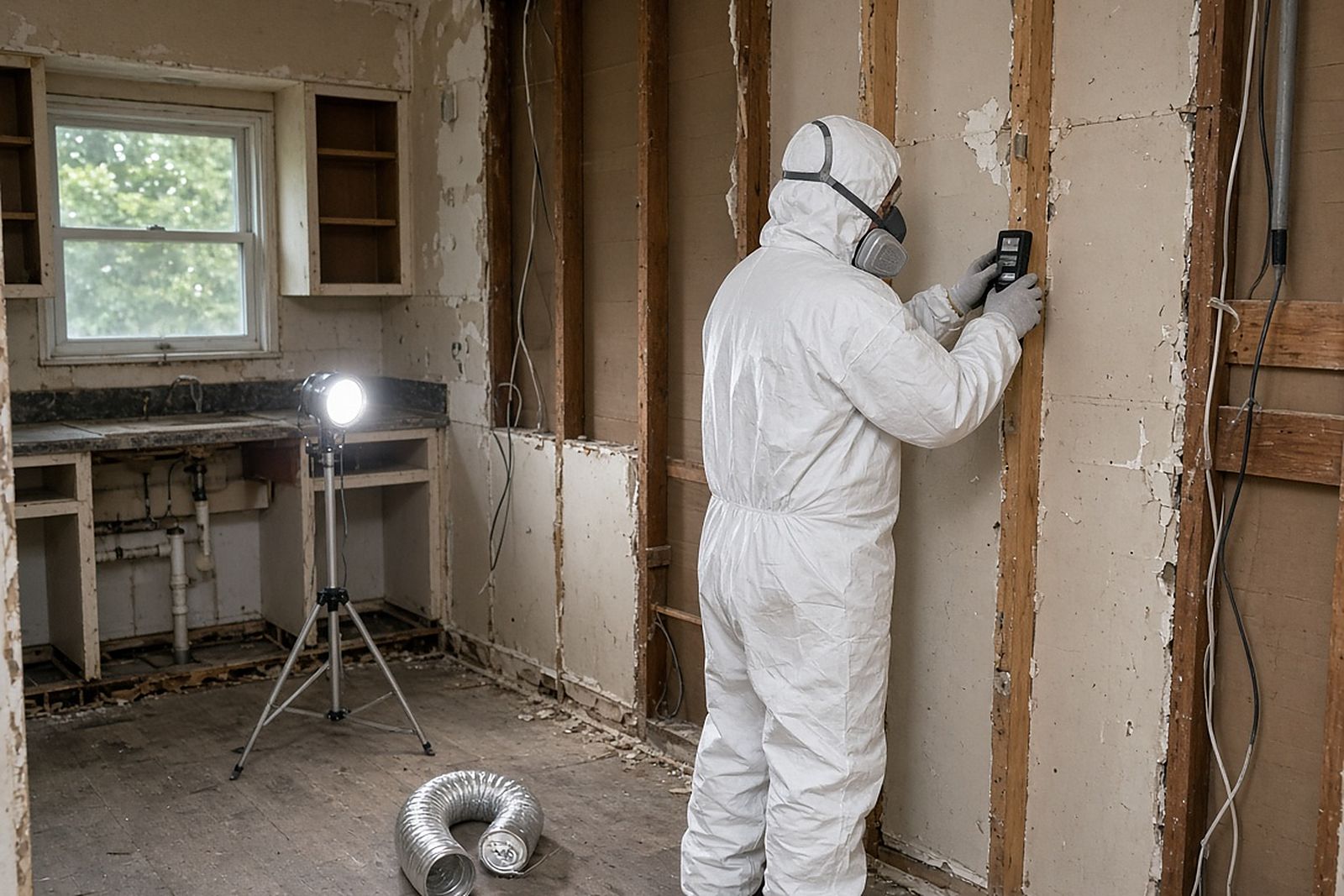
The cleanup step starts with sealing off work areas. Crews remove soft, absorbent materials like carpet and drywall. They wash hard surfaces with detergent. They clean or replace the heating and cooling system. Sometimes they fix plumbing where chemicals were poured down drains. Hauling away removed materials is another line. After cleaning, new samples show whether surfaces meet the required standard. Rebuilding, like new floors, wallboard, paint, and fixtures, is often priced separately by a general contractor after the property passes.
- First assessment and wipe samples
- Sealing off work areas, with air filters and plastic walls that keep dust inside
- Tearing out, bagging, and hauling carpet, drywall, and other absorbent materials
- Washing hard surfaces with detergent, often more than once
- Checking and treating the heating, cooling, and plumbing systems
- Final clearance samples and a written report
- Rebuilding and finish work after the property passes
What published cost figures exist for meth remediation?
Good public price data is hard to find, and every property is different. One often-quoted benchmark comes from the Ohio Department of Health. In 2016, it reported Oregon's experience showing average meth lab cleanup costs of $6,500 per 1,000 square feet. There was also a $1,400 up-front assessment. That figure is useful as history. But it reflects one place and time. It is not a quote for your building.
Treat any published average as a starting point for questions, not a budget. Labor costs, dump fees, state standards, and how much contamination there is all differ. One number can't capture a property where chemicals sat in the basement or were poured into the septic system. Ask each provider how its estimate compares with what it usually sees. Ask what about your property pushes the price up or down.
Which factors move the price for a contaminated property?
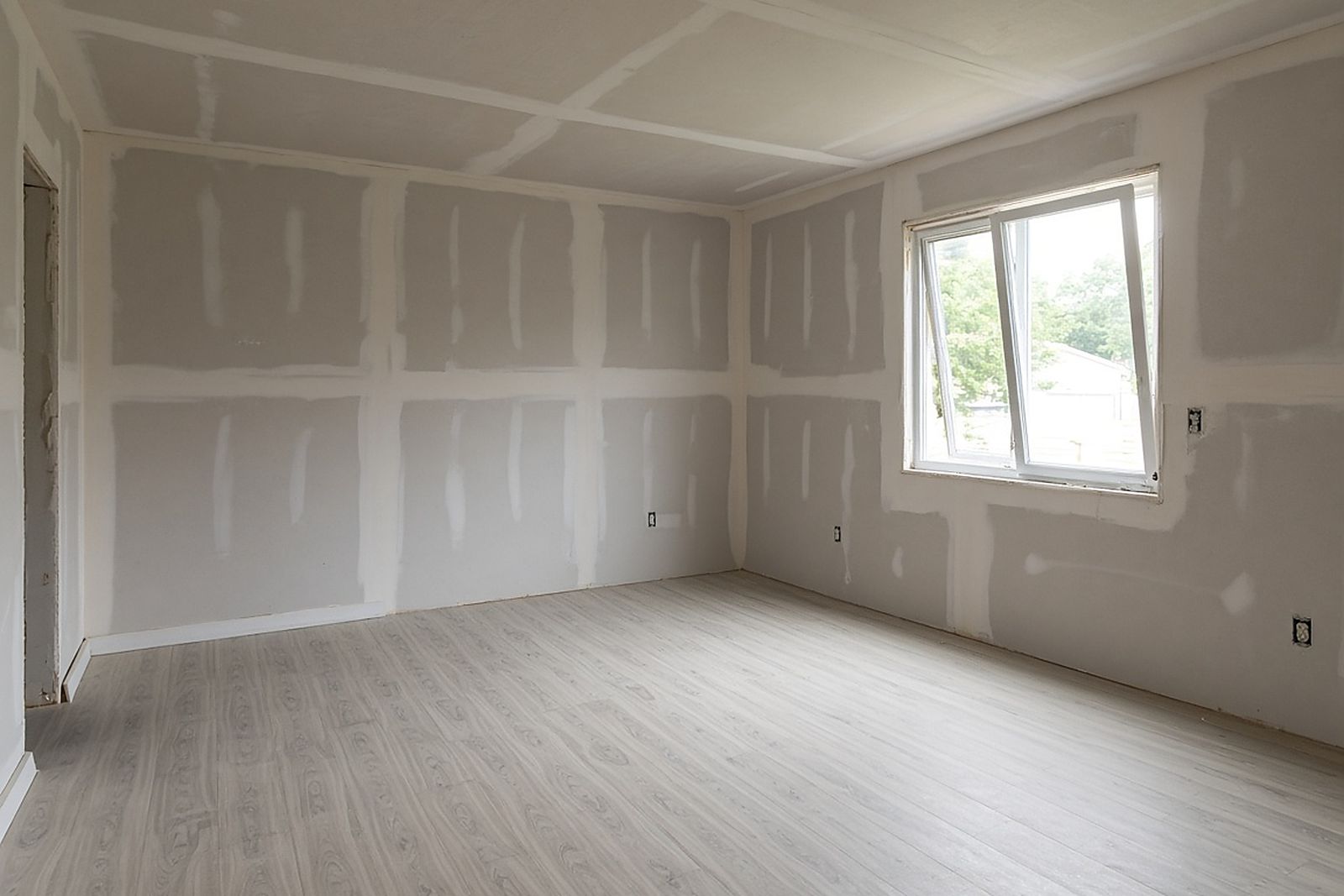
The biggest factor is whether the drug was made there or just smoked there. Making meth uses solvents, acids, and other chemicals. These can soak into floors, cabinets, and drains, and they often spread further. Smoking tends to leave residue on walls, ceilings, and inside air ducts. That can still cover a lot of area. But it is usually easier to plan and test.
Other factors include the size of the building and how long the activity went on. Price also depends on how many rooms show high residue and what the building is made of. A home with smooth metal ducts and hard floors may clean up more easily. A home with flexible ducts, popcorn ceilings, and wall-to-wall carpet may be harder. Septic systems, detached garages, sheds, and outdoor burn or dump spots can add a lot of work. Your state's standard matters too. A stricter target may mean more washing or more tear-out to pass.
How do you read and compare itemized quotes?
Ask every provider to base its quote on the same assessment report. That way, you are comparing from the same starting point. Then check that each quote names the rooms and parts it will treat. It should say whether each material will be cleaned or removed. Vague phrases like "complete decontamination" make it hard to know what you are buying. They also make it harder to hold anyone responsible if a room fails later.
Look closely at how many washing rounds are included. Check what happens if the final samples fail. Some providers include one round of recleaning in the price. Others bill failed areas as extra work. Confirm who takes the final clearance samples and whether that cost is in the quote. Last, check that the heating, cooling, and plumbing sections are specific. Those systems are where quotes most often differ between companies.
What hidden costs should property owners anticipate?
Failed clearance samples are the most common surprise cost. If residue is still above the target after the first cleaning, more work follows. That may mean more washing, more tear-out, and another round of samples. It is wise to set aside money for at least one retest. This is most true where meth was made, or where soft materials were left in place to save money.
Other costs often show up later. These include lost rent while a unit is empty and utility bills during the project. You may also face permit fees for rebuilding, updated disclosure forms, and legal review before a sale. If the property sat empty a long time, you may face other problems like mold, pests, or vandalism. Tracking these costs from the start shows you the true cost. It also supports any claim you make later.
Who usually pays for meth lab remediation?
In most cases, the property owner must pay for the cleanup. This is true even when a tenant or past occupant caused the problem. Landlords may try to get the money back from the tenant. They can claim the security deposit or file a lawsuit, but getting paid is often uncertain. Buyers who find contamination after closing sometimes go after the seller. This is most likely if the seller had a duty to disclose it and didn't.
Lenders and insurers may play a role, depending on the policy terms. Some local governments have programs, or place liens, when an owner can't or won't finish the cleanup. A lien is a legal claim against the property. When a property is inherited, the estate usually pays the cost before anything is handed out. Rules vary by state and county; verify with the local authority. A real estate lawyer can help you see which options really exist for your property.
What might a typical project look like in practice?
Picture a one-story rental house. A tenant was arrested, and police found signs of small-scale meth making in the kitchen and garage. The assessment shows high residue in the kitchen, garage, and hallway. It shows moderate levels in the bedrooms and residue inside the return air duct. The owner gets two quotes based on the same report. One plans to wash all the drywall. The other plans to remove the kitchen and hallway drywall and wash the rest.
The removal plan costs more up front. But the provider explains that heavily affected painted wallboard often fails testing even after many washes. The washing-only quote includes one round of recleaning and bills for anything after that. The owner asks how each plan would work if samples fail. That lets the owner compare the likely total cost of passing, not just the first number on the page.
Estimate your range
Meth Lab Cleanup cost range estimator
Educational only. Real pricing needs an on-site assessment and a written scope. Insurance coverage is decided by your carrier, not by this tool.
Educational range: $3,000 – $5,000
Scaled from a published reference range (typical biohazard cleanup project, national) reported by Fixr (2025). Your region, provider and the actual findings on site can move the real number outside this range.
Cost level: Mid range.
None of the big cost multipliers are selected. Minimum service charges, travel and waste fees still apply.
Ask every quote to itemize labor, containment, product, waste disposal, verification sampling, and any rebuild, and to state what is excluded.
Open the full tool page for a worked example and more answers.
State methamphetamine cleanup standards
Standards decide how much testing and cleaning a property needs, which drives cost. Values and rules change; confirm the current standard with the agency linked in each row.
| State | Standard | Agency |
|---|---|---|
| Federal (voluntary) | There is no federal number. EPA says state limits range from 0.05 µg/100 cm² to 1.5 µg/100 cm². The most common is 0.1 µg/100 cm².Source: Voluntary Guidelines for Methamphetamine and Fentanyl Laboratory Cleanup (EPA-540-B-21-002). First published 2009. Updated 2013 and 2021. EPA says it does not set number-based cleanup limits. As of Aug 2021, 21 states had a number limit for meth. Another 11 had guidance based on steps to follow. | US EPA |
| Alaska | 0.1 μg/100 cm²Source: ADEC 'Guidance and Standards for Cleanup of Illegal Drug-Manufacturing Sites,' Rev. 1 (April 19, 2007). This is the 'fit for use' limit in Table 2-2. It also sets other limits. Odor chemicals (volatile organic compounds): 1 ppm. Lead: 2 μg/100 cm². Mercury: 50 ng/m³. The program is under HB 59 (2003). | Alaska DEC |
| Arkansas | 0.05 µg/100 cm²From the Clandestine Laboratory Remediation Cleanup Standards. Surface wipe and vacuum samples must not be over 0.05 µg/100 cm². | Arkansas DEQ (Division of Environmental Quality) |
| California | At or below 1.5 micrograms per 100 square centimeters (1.5 µg/100 cm²)Set by Health and Safety Code §25400.16. That law is the Methamphetamine or Fentanyl Contaminated Property Cleanup Act. It is a health-based limit. It was signed into law in October 2009. | CA Legislature / DTSC |
| Colorado | 0.5 µg/100 cm². Limited exposure areas: 4 µg/100 cm². Painted-over surfaces: 1.5 µg/100 cm².Source: 6 CCR 1014-3, Section 7.0, Cleanup standards. This is a CDPHE rule. The CDPHE web page returned a 403 error. The value was read from the rule text. | CDPHE |
| Connecticut | 0.1 µg/100cm². This target is the lowest level a test can detect. If a lower detection limit can be reached, that is the target.CT DPH Meth Lab Cleanup Protocol (around 2006). It is a cleanup target in guidance. | CT DPH |
| Hawaii | 0.1 μg/100 cm²The rule is HAR Title 11 Chapter 452, from Nov 2007. Its name is Requirements for Decontamination and Cleanup of Methamphetamine Manufacturing Sites. It comes from Act 170 of 2006. The value is in Table 6-3 of the Technical Guidance Document (July 2010). That table lists the levels that call for cleanup. Program: https://health.hawaii.gov/heer/guidance/specific-topics/meth-lab-cleanup/ | Hawaii DOH HEER Office |
| Idaho | 0.1 µg/100 cm². That is 0.1 micrograms per 100 square centimeters.The rule is IDAPA 16.02.24. Its name is Clandestine Drug Laboratory Cleanup. See Section 500.01. It took effect 7-1-24. The last test samples are taken by a trained safety expert. The rule calls this a qualified industrial hygienist. Program page: https://healthandwelfare.idaho.gov/health-wellness/environmental-health/clandestine-labs | Idaho DHW |
| Illinois | 1.5 micrograms per 100 square centimeters. This uses the California DTSC health-based standard. Illinois has no standard of its own.IDPH guidance calls the California 1.5 µg/100 cm² value 'the best current standard to use.' It also points to the EPA voluntary guidelines. This is guidance, not a rule. | Illinois Dept. of Public Health |
| Indiana | ≤ 0.5ug/100cm² (0.5 µg/100 cm²)Final cleanup standard under 410 IAC 38. If any single sample is over the standard, the site must be cleaned again and tested again. | Indiana Dept. of Health |
| Kansas | No more than 1.5 μg/100 cm² of leftover meth. This is a health guidance value.From KDHE 'Cleaning Up Former Methamphetamine Labs' (10/26/10). This is guidance. Program page: https://www.kdhe.ks.gov/268/Cleaning-Up-Properties-Contaminated-by-F | KDHE |
| Kentucky | 0.1 µg/ 100 cm² (all surface materials)Rule: 401 KAR 101:040 Section 11. Run by the Division of Waste Management meth lab cleanup program. | KY Energy and Environment Cabinet |
| Louisiana | Program exists; see agencyLDEQ has meth lab cleanup guidelines. They set steps to follow, not a number. They cover HAZWOPER safety training, HVAC, and how to wash surfaces. No number for leftover residue was found in the document text. | Louisiana DEQ |
| Michigan | 0.5 µg/100 cm² (wipe sample)From 'Cleanup of Clandestine Drug Laboratory Guidance' (June 5, 2007), Table 1, Acceptable Cleanup Criteria. It also sets limits for lead (40 µg/ft²) and mercury in air (1 µg/m³). | MDHHS (formerly MDCH) |
| Minnesota | Program exists; see agencyMDH says it does not keep meth lab cleanup guidance. It points people to the EPA voluntary guidelines (updated June 2023). The page gives no state number. | Minnesota Dept. of Health |
| Montana | At or below 1.5 micrograms of meth for each 100 square centimeters of surface (1.5 µg/100 cm²)Set by MCA 75-10-1303. This is the default in state law unless the department adopts a different standard by rule. DEQ program: https://deq.mt.gov/cleanupandrec/programs/meth | Montana DEQ |
| Nebraska | Less than or equal to 1.5µg/100cm² (surface area wipe)The rule is 178 NAC 24, Methamphetamine Cleanup. See Section 009, Decontamination Standards. The chapter was adopted in 2009. It also sets a limit for odor chemicals in the air. These are volatile organic compounds. The total must be ≤1 ppm. DHHS program: https://dhhs.ne.gov/Pages/Environmental-Risk-Assessment.aspx | Nebraska DHHS |
| New Mexico | Surface wipe <1.0 μg/ft². This covers any illegally made controlled substance or the drugs used to make it.The rule is 20.4.5 NMAC, Clandestine Drug Laboratory Remediation. The pass levels are listed at 20.4.5.17 NMAC. It is not just for meth. It covers all controlled substances. The unit is per square foot. NMED guidance: https://www.env.nm.gov/hazardous-waste/clandestine-drug-laboratories-cleanup-guidance-3/ | NMED Hazardous Waste Bureau |
| North Carolina | 0.1 micrograms per 100 square centimeters (0.1µg/100 cm²). This is a recommended clearance level.This level is recommended in the state's Illegal Methamphetamine Laboratory cleanup guidelines. G.S. 130A-284 and 10A NCAC 41D .0101-.0105 require cleanup before people move back in. Those rules set steps to follow. The rule text has no number. Program: https://epi.dph.ncdhhs.gov/oee/a_z/meth.html | NC DHHS Occupational & Environmental Epidemiology |
| Oklahoma | Program exists; see agency'Guidelines for Cleaning Up Former Methamphetamine Labs' is joint guidance from OBNDD, OSBI, OSDH, and DEQ. It sets steps to follow. The document gives no number for leftover residue. | Oklahoma DEQ |
| Oregon | Program exists; see agencyOregon runs a Clandestine Drug Lab Cleanup Program under ORS 453 and OAR 333-040. It uses licensed contractors and a Certificate of Fitness. No meth number was found on the OHA pages or in the OAR 333-040 text that was checked. The OAR says cleanup means lowering residue to the lowest practical level. The Public Health Division decides what that level is. | Oregon Health Authority |
| South Dakota | .1 microgram of meth residue per 100 square centimeters (ug/100cm²). This is a recommended 'desired cleanup level' (a guideline).Guideline only. The DANR program page says South Dakota has no cleanup standards for this. That means debris from surfaces hit by meth or fentanyl. The page points to the EPA guidelines instead: https://danr.sd.gov/Environment/WasteManagement/HazardousWaste/MethLab.aspx | SD DANR |
| Tennessee | Meth must not be over 0.1 microgram/100 cm² on any surface.Rule 0400-15-02-.01 (effective May 2012). It also limits odor chemicals (volatile organic compounds) in air to ≤1 ppm. It falls under T.C.A. 68-212 Part 5, which covers quarantine. Program: https://www.tn.gov/environment/program-areas/rem-remediation/meth.html | TDEC Division of Remediation |
| Utah | At or below 1.0 microgram of meth per 100 square centimeters (1.0 µg/100 cm²)Utah Admin. Code R392-600-6, Confirmation Sampling and Decontamination Standards. This rule is under the Illegal Drug Operations Site Reporting and Decontamination Act. | Utah DHHS / DEQ |
| Virginia | 1.5 micrograms per 100 square centimeters (µg/100 cm²)From VDH Guidelines for Cleanup and Certification of Buildings Formerly Used to Manufacture Methamphetamine (posted 9/29/2025). It is a health-based target for after cleanup, under Va. Code §32.1-11.7. | Virginia Dept. of Health |
| Washington | At or below 1.5 micrograms per 100 square centimeters (1.5 µg/100 cm²)Rule: WAC 246-205-541. It also sets other limits. Lead: ≤20 µg/ft². Mercury in air: ≤50 ng/m³. Odor chemicals (volatile organic compounds): 1 ppm. Program: https://doh.wa.gov/about-us/executive-offices/prevention-safety-and-health/environmental-public-health/office-environmental-health-and-safety/drug-lab-cleanup-program | WA DOH |
| West Virginia | 1.0 µg/100 cm² of area sampled. This is the level for moving back in after cleanup.Rule: 64CSR92 Clandestine Drug Laboratory Remediation Rule §64-92-8.1, effective May 1, 2022. An earlier 2008 version set 0.1 µg/100 cm². The work is done by licensed cleanup technicians. Program: https://oehs.wvdhhr.org/rtia/clandestine-drug-lab-remediation/ | WV OEHS (Radiation, Toxics & Indoor Air) |
| Wisconsin | 1.5µg/100cm² of meth residue. This is a recommended cleanup goal.From 'Cleaning Up Drug-Impacted Dwellings: A Guide for Local Health Departments' P-47411 (01/2023). It follows the EPA health-based value. It also recommends 1.0 ng/100cm² for fentanyl. Program page: https://www.dhs.wisconsin.gov/chemical/clean-lab.htm | Wisconsin DHS |
Costs questions about meth lab cleanup
Is testing billed separately from the cleanup itself?
Often, yes. Some places require the tester and the cleanup company to be separate, so the bills are separate too. Even where that isn't required, labs usually charge for each wipe sample. So testing may show up as its own line. Ask whether both before and after samples are included. Ask how many samples each round assumes. Also ask who pays if more samples are needed after a failed result.
Can I just paint over walls to save money?
Painting without proper cleaning is not usually an accepted cleanup method on its own. Residue can stay under fresh paint and may seep through over time. Future testing or a buyer's inspection may still find it. Some state guidance allows sealing surfaces after washing and passing tests, but the rules differ. Ask your provider what your state accepts. Never paint before cleanup is done and written up.
Why are removal costs so high for carpet and drywall?
Removing soft materials from a contaminated building takes more than tearing them out. Crews work inside sealed-off areas with protective gear. They bag materials carefully to keep dust down and haul them off for proper disposal. They also clean the bare framing and subfloor underneath. All that protective work, careful handling, and follow-up cleaning is why removal is often a large share of the quote.
Will my property value recover after cleanup?
Many properties go back to normal use after a documented cleanup. But the history can affect how buyers see them. A full file often reassures buyers and lenders. It should show the assessment, the cleanup work, the passing test results, and any release from an agency. Disclosure duties vary by state. Ask a local real estate agent or lawyer how the history may need to be shared. Ask whether a clearance letter changes those duties.
Do I need a separate contractor for rebuild work?
Often, yes. Many cleanup firms stop once the property passes. They leave rebuilding to a licensed general contractor, though some do both. Splitting the work can make pricing clearer. It also makes sure rebuilding starts only after clean results are on paper. If one company does both, ask for separate prices for cleanup and rebuilding. Then you can see what each step costs and compare fairly.
What if the samples fail after cleaning?
The areas that failed will usually need more cleaning, more tear-out, or both. Then another round of samples follows. Whether that extra work is included depends on your contract. That's why the quote should state the provider's policy on failed tests. Keep all sample reports, even the failed ones. They show the full history and prove the property finally met the required standard.
Can a buyer negotiate the price because of past contamination?
Buyers often factor cleanup needs into their offers, mostly when the property hasn't passed testing yet. A property with a finished cleanup and full records usually sells at less of a discount. A property sold as-is with unknown conditions often sells for less. Both buyers and sellers should rely on real test results, not guesses. Each side may benefit from advice from a real estate lawyer who knows local disclosure rules.
What other visitors said
Every count is a real visitor vote; nothing is seeded or padded. One vote per poll per device, and you can change your answer.
If a house you wanted had a documented lab cleanup that passed clearance, what would you most likely do?
Which factor would you weigh most when choosing a meth cleanup contractor?
More on meth lab cleanup
Meth Lab Cleanup services
See how the inspection, chemical cleanup, duct work, and clearance testing fit together on a former lab or heavy-use home before you hire.
Insurance and payment
Which policies may respond, how to document a claim, and what to do if coverage is denied.
Planning tools
Use hands-on planners for lab properties. They sort out costs, questions for providers, insurance steps, first-day actions, waste types, and the risk of doing it yourself.
Community polls
See how other owners, buyers, and landlords think about disclosure, sampling, and contractor choice, then compare your own view with theirs.
Knowledge quiz
Test what you know before you talk with a provider. Topics include how residue spreads, state programs, sealing off work areas, cleanup steps, waste, and clearance records.
Articles and resources
Read plain explanations of state rule changes, testing questions, disclosure disputes, and lessons from real cleanups across the country.
Field guides
Dig into step-by-step guides on inspections, soft materials, and ducts. They also cover landlord duties and building a strong file for future buyers.
City guides
Find cleanup and testing providers who serve your area. Remember to check every credential directly with the state agency.