Boston, MA

Meth Lab Cleanup in Boston, MA: Brownstones, Triple Flats, and MassDEP Residue Files

What to do, who to contact, and what to ask in Boston.

Meth residue in a Boston brownstone or triple-decker? Massachusetts sets no move-in number. See who to call and which lab records you should keep.

Get an email reply about meth lab cleanup

Send a short message to the follow-up inbox. A coordinator can reply by email. This form does not send emergency help; call 911 first if anyone is in danger.

Tell us what you need help with. Share a short description; please leave out medical details, access codes, and other sensitive information.

A request does not confirm a booking. For immediate danger, contact local emergency services.

Or email info@methlabcleanup.online

The short answer for Boston, MA

If you own, rent out or are buying a Boston flat with a meth history, start by making sure any chemicals are gone, then ask for mapped wipe tests. Massachusetts has no set number for moving back in. So your packet rests on an accredited lab, a written pass level for your address and EPA’s voluntary guidance.

What to do, step by step

  1. 1

    Make sure the home has been released, then get a wipe plan

    If chemicals were present, wait until hazmat or emergency crews release the home. After the release, ask for a written wipe plan. It should name the methods, the detection limits and the spots on your floor plan. EPA’s voluntary guidelines offer ideas on the order of work. Ask the tester to record signs of cooking versus smoking, so the waste plan matches the chemicals found. Keep any MassDEP or city letters about your address with the plan.

  2. 2

    Expect soft materials to come out of the flat

    In a triple-decker or brownstone flat, carpet, drapes and other soft materials that cannot be cleaned in a way you can prove are removed. A good crew scrubs each hard surface you keep with detergent. A HEPA vacuum, which traps very fine dust, goes over it next. There should be no dry sweeping, since that pushes dust into the flats above and below. Chemically tainted waste gets reviewed before disposal. Ask for a list of your belongings, and retest only the items worth saving.

  3. 3

    Ask how heat, chases and the basement are handled

    Find out whether forced air, steam radiators or a mix serves your flat. Where there are filters, they should be replaced and the returns checked. Fans stay off while materials are torn out. Tools get cleaned before they leave the flat’s sealed zone, so nothing rides down the shared stairs. A good crew’s safety plan fits chemical hazards. If your building shares a basement mechanical room, ask who will let the crew in and how it will be protected.

  4. 4

    Build your packet for a sale or a new tenant

    Ask for mapped lab results and chain-of-custody forms, the signed record of who handled each sample. Add waste records and photos. Include a written account that separates cooking finds from smoking-only finds. Any failed spot should be retested before you say the flat is ready to live in. Keep the packet for disclosure and for future turnovers. A Massachusetts lawyer can tell you what your purchase and sale agreement requires you to share.

What cleanup is like in Boston

Boston’s brick rows in the South End and Back Bay, triples in Dorchester and Jamaica Plain, and older condo conversions pack homes around shared stairs. Many also share basement mechanical rooms, so your neighbors are part of the picture. Massachusetts has no statewide numeric meth limit for moving back in. It offers nothing like the rule California set in section 25400.16. So you need a written pass level for your own address. Agree on it with the industrial hygienist, who is a trained chemical-safety expert. Include the accredited lab and any lender or buyer who has demands. Nobody should hand you a Massachusetts clearance microgram.

Know which office does what. The Massachusetts Department of Environmental Protection, called MassDEP, runs Waste Site Cleanup and emergency response. Those are your state contacts when abandoned containers, spills or chemical threats remain. The Boston Public Health Commission takes city environmental health questions once a scene is stable. Be open with the cleanup company about what happened in the flat. Cooking leaves solvents, raw ingredients, reaction waste and stained fixtures, and it makes for a bigger job. Smoking alone can still coat plaster lath, soft goods and duct dust in stacks sealed with storm windows.

In these buildings, the main worry is residue moving from floor to floor. Stacked porches, plumbing chases and shared laundry all give it a path, which can pull the flats above and below yours into the work. Soft wood trim and old plaster hold residue, so expect questions about what can stay. Paint, ozone machines and fragrance cannot replace mapped wipe results. When you write a disclosure for a sale or a new tenant, tie your wording to what was tested, what was removed and what was tested again.
What to expect for your type of home

  • Plaster-era flats: Plan for carpet, pad and soft goods to be removed when wipe data or staining shows buildup. Ask the company which rooms that covers and what it will cost you.
  • Triple-deckers with shared stairs: Ask how the stairs and stacked porches will be protected. Dust from tear-out should not spread to the floors above and below, where your neighbors or tenants live.
  • Flats where cooking is suspected: Ask for one list of cook chemicals and another of smoking gear. That way the waste from your Boston home follows the right MassDEP paths.
  • Multi-unit buildings: Line up access to shared dryer vents, boilers and attic chases before work starts. These tie the flats together, and the crew may need your neighbors’ or landlord’s help to reach them.

Papers and records to keep

  • Hazmat or emergency release notes, if chemicals were present in the home
  • The written test plan and pass-level statement for your address
  • Floor plan wipe map covering the risk rooms in stacked flats
  • List of soft items removed, plus disposal records or the waste shipping record
  • Log of cooking versus smoking-only signs, with photos of each
  • Final lab results, bundled so your tenant, landlord or buyer can read them

Local offices and official help

Common questions in Boston

Has Massachusetts set a meth limit I must meet before moving back into my flat?

No. Massachusetts has no statewide numeric limit, and EPA’s voluntary guidelines are technical advice. They do not set a federal microgram limit that brownstones or triple-deckers must meet. Be wary of any ad or listing that quotes a state number. Keep your lab file so later owners, buyers and lenders can see what was measured. MassDEP or city officials may give written directions for a site after a chemical emergency. If so, follow them and store them with the results.

Why does the crew need to protect the stairs and porches my neighbors use?

Because flats in these buildings share stairs, porches and plumbing chases, and many share basement mechanical rooms. Smoking-only residue still travels as fine dust, and cooking solvents call for more care with waste. Talk with your neighbors about access when shared paths must be covered. Ask for photos of the stair protection. Fresh paint over residue in plaster or chase dust can dirty rooms you already cleaned. A good crew uses HEPA vacuums, not brooms.

When should I call MassDEP before any washing starts?

Call when abandoned containers, spills or unstable chemicals may still be in the home. Wiping walls while those are present is dangerous. DEA and local hazmat resources explain why bulk lab chemicals are not a do-it-yourself job. Once the hazards are removed, switch to a written plan for residue testing and cleanup. Keep the waste shipping records from chemical removal next to the later wipe reports. Agency letters about your site always come before general advice.

There is no state number. Does smoking-only residue still matter?

Yes, it still matters. Having no state number does not make surfaces safe by default. Accredited wipe tests measure how much residue is there, and soft materials often need to come out. A landlord who re-rents after only picking up drug gear has no proof for the next household. Buyers may still ask for lab PDFs. Write down a pass level, clean to it and keep the file. Keep smoking-only and cooking cases apart so waste choices stay accurate.

What belongs in my purchase and sale packet?

Start with a plain statement that Massachusetts has no statewide numeric meth limit for moving back in. Your results are proof about this one home, not a check against a published state number. Do not claim the home is clear because of odor treatments. If the first round failed, add the retest reports so the timeline is plain. Thin packets stall the transfer when lenders ask basic environmental questions. Ask a Massachusetts lawyer what you must disclose.

How does a Boston winter change the job in a triple-decker?

It makes dust control and hauling harder. In winter, windows stay shut and radiators or furnaces run all the time, so residue stays inside and circulates. Crews need heat to work, but running the building’s system during tear-out can spread dust. Ask about temporary electric heat in the work area, sealed radiator covers and closed hallway doors. Snow and ice also slow debris removal on narrow streets. Plan around storms and snow emergency parking rules.

I am a student renting near campus. What should I do if I suspect residue?

Tell your landlord in writing, and do not scrub it yourself. Maybe you rent in Allston, Mission Hill or the Fenway. If you notice chemical smells or stains when you move in, ask whether the unit was tested. The Boston Public Health Commission can answer general health questions. Your school’s off-campus housing office may also be able to help. Keep copies of all messages in case testing or a move becomes needed.

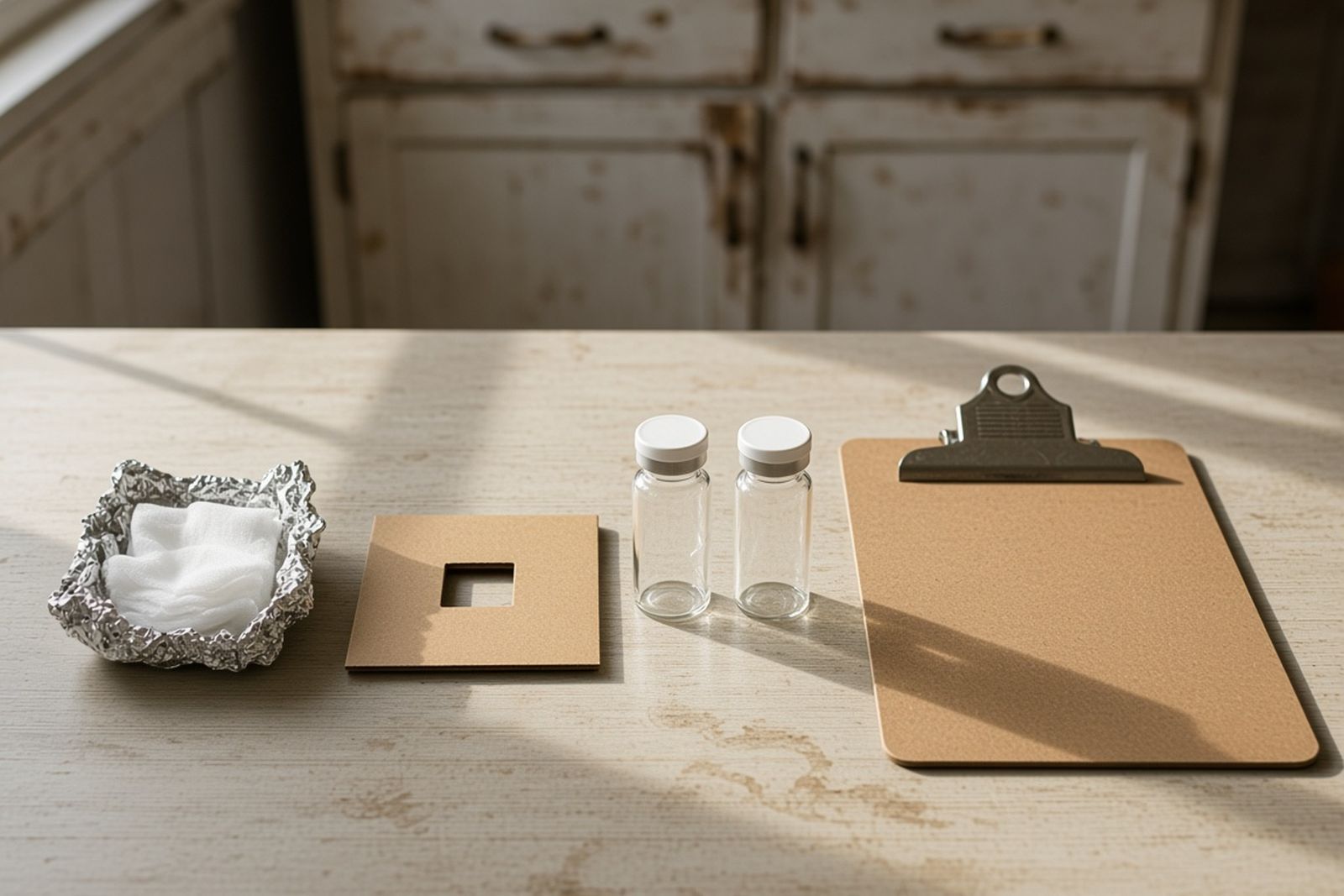
Wipe-sampling supplies on a counter: gauze in foil, a sampling template, vials and a clipboard
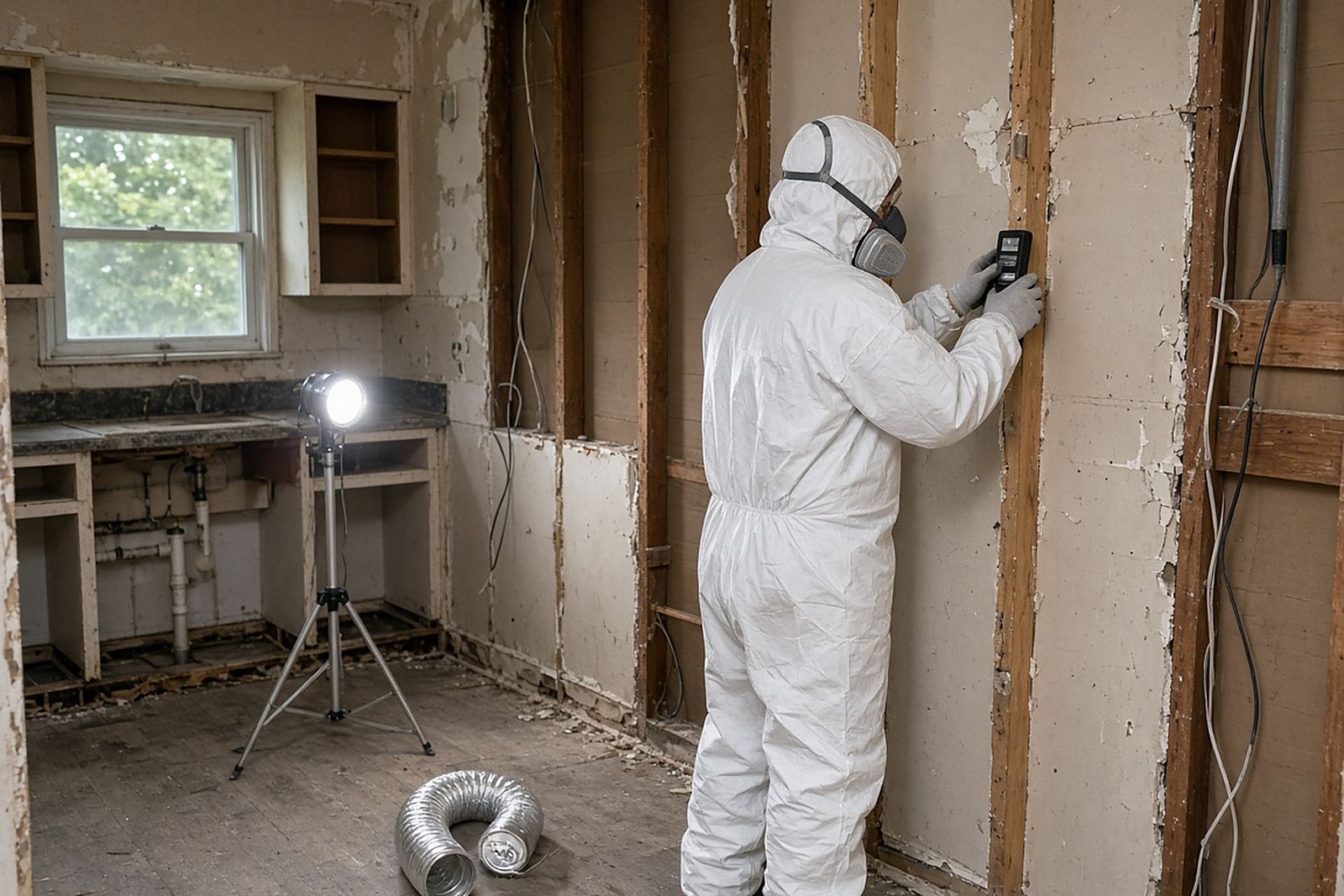
Technician in a respirator checking exposed studs in a gutted kitchen with a work light and duct

Facts worth knowing

  • As of April 2025, 18 states plus D.C. had no laws on cleaning up properties contaminated by illegal drugs.

    Why it matters: Check with your local health department, because local orders or seller disclosure duties may still apply to you without a state law.

    Source: Legislative Analysis and Public Policy Association, 2025

  • In one Australian home where meth was cooked, researchers found extremely high contamination more than five years after cooking stopped, even though people had lived there since.

    Why it matters: Do not assume time or normal housekeeping has made a former lab safe; ask for testing before you move in or rent it out.

    Source: International Journal of Environmental Research and Public Health, 2019

  • Minnesota sellers who know meth was made on a property must tell buyers in writing before a sale, and buyers may sue for cleanup costs within six years.

    Why it matters: If you bought a Minnesota home with a hidden meth history, you may be able to recover cleanup costs, so ask a lawyer soon.

    Source: Minnesota Legislature, Office of the Revisor of Statutes, 2024

Tools that help right now

What would you do?

Poll results

Vote to see how other people answered. You can change your answer at any time.

Your experience

If a house you wanted had a documented lab cleanup that passed clearance, what would you most likely do?

Be the first to vote
Industry

Which factor would you weigh most when choosing a meth cleanup contractor?

Be the first to vote

Need help in Boston?

Send a short message about the property to the follow-up inbox. A coordinator can reply by email with next steps.

Your request is sent to the follow-up inbox. A coordinator can reply by email.

If anyone is hurt or in danger, call 911 first.