South · US

Meth Lab Cleanup in Potomac, MD: River Road Estates, Well Houses, and Project Lab Packets

Planning meth lab cleanup in Potomac, MD

Potomac, MD meth cleanup planning for River Road acreage, well houses, and staff suites, with lab packets for each lot. Maryland has no statewide number. This is planning guidance, not a claim of a local office or crew in Potomac.

Get an email reply about meth lab cleanup

Send a short message to the follow-up inbox. A coordinator can reply by email. This form does not send emergency help; call 911 first if anyone is in danger.

Tell us what you need help with. Share a short description; please leave out medical details, access codes, and other sensitive information.

A request does not confirm a booking. For immediate danger, contact local emergency services.

Or email info@prompartybuses.com

Direct answer

The short answer for Potomac, MD

This page covers meth residue on gated acreage near River Road, including well houses and detached staff suites. Maryland has no statewide meth cleanup number, and we do not invent one. MDE waste rules, Montgomery County health contacts, EPA voluntary guidance, and a written pass mark for the whole lot help trustees check the property before listing. Made-up microgram figures do not.

Editorial guide · Biohazard Remediation NetworkUpdated 2026-07-22Location focus: Potomac, MD

Local planning context

Gated acreage along River Road and nearby lanes often pairs a main house with a well house, a generator shed, a detached staff suite, and a pool cabana. These buildings rarely show up in listing photos. Residue is often found during a trust inventory, or after an empty staff suite turns up smoking debris. It may also come up when pollution insurance underwriters want wipe data before they release a hold. This page does not claim any Maryland statewide number for moving back in after meth on River Road estates. EPA’s voluntary guidelines map out a technical sequence for the work. They set no federal microgram rule that binds a gated River Road lot. Trustees should put a pass mark for the lot in writing. They should also refuse any ad that makes up a state cleanup number.

The Maryland Department of the Environment (MDE) comes in when materials soaked with chemicals leave the property. Montgomery County environmental health desks answer questions once a scene is safe. DEA guides explain the hazards of meth making. Cooking chemicals in a staff suite, like solvent cans or stained utility sinks, mean more waste testing. Smoking alone still soaks into wool runners, cloth settees, and the returns of a separate heat pump. The risk of tracking dust jumps when grounds staff carry laundry baskets from a suite with residue across the motor court. It is worst when they go into the main kitchen without sealed bags or a change of shoes.

Quiet gated neighborhoods still bring heavy paperwork during a sale. Underwriters ask for lab PDFs labeled by building, even with no state number in law. A staff suite that stays shut up traps odor, and odor does not prove a space is clear. Plan to seal off one suite at a time and use HEPA vacuums that trap fine dust. Have a binder ready for disclosure before listing photos start again.
Property considerations

Walk the main house, staff suite, pool cabana, and any heated well or utility building before you pick wipe-test spots.

Stage sealed debris along a service lane that never passes through formal entry halls or dining rooms.

Check each separate heat pump or air handler, since a staff suite can build up residue apart from the main house.

Flag solvent cans and stained utility fixtures apart from smoking foils so waste choices line up with MDE.

Expect underwriters and trustees to ask for lab results labeled by building before they release listing holds.

Response-planning framework

Walking the lot and writing a pass mark for it

Photograph each heated building with the trustee. Note any well house or generator shed access that could become a path for staging. Write the pass mark for this lot or for a specific letter, because this page makes up no Maryland statewide meth number. Brokers should not shoot listing photos until someone signs the testing plan. Record signs of cooking versus smoking before any soft goods leave the property.

Sealing off suites and sorting soft materials across the motor court

Seal off the affected staff suite or wing so residue does not drift into rooms used for guests. Throw out textiles with heavy residue. Retest only the hard items worth keeping. Wash hard finishes in each River Road building with detergent and HEPA vacuums. If solvents were present, test and label chemical wastes under MDE and federal hazardous waste rules. List belongings one building at a time for the trust file.

Separate air systems and clean shoes

In each affected climate system, swap the filters and inspect any return you can get to. Keep equipment off during tear-out. Require shoe changes or shoe covers when crews cross the motor court into clean floors. Dust tracked from suite to suite is a main reason jobs fail on gated acreage.

An honest binder for underwriters

Keep the binder with the trust records. Fragrance machines do not settle an underwriter’s question.

Documentation checklist

  1. 1Testing plan and pass mark written for this lot
  2. 2Site plan labeled by building, including staff suite, cabana, and utility buildings in scope
  3. 3Custody forms plus accredited lab results, sorted by River Road building
  4. 4List of removed soft materials for each River Road building
  5. 5Service notes for each affected heat pump or air handler
  6. 6Waste testing records when River Road cooking chemicals were found
  7. 7Any Montgomery County or MDE letters, if issued

Official resources

Questions for this location

Is there a Maryland meth cleanup number trustees can cite for River Road estates?

This page claims no Maryland statewide number for moving back in after meth on River Road estates. Trustees should lock in a pass mark in a written wipe plan. It should name the accredited lab, maps labeled by building, and the lowest amount the lab can measure. Add any underwriter letter that applies. Ads must not make up a state number. Estate buyers should be able to see exactly what the lab measured, so hold on to those reports. If an agency issues an order for the estate, that order outranks this page.

If smoking debris is only in a staff suite, can the main house skip testing?

Not by default. Soft goods, laundry baskets, and shoes can carry residue across a motor court into the main kitchen. Photograph how the staff suite connects to the main house, and write down why you chose your scope. Early tests in the main house that find no meth, with sealed paths, can support a smaller scope. Open paths call for more testing. Treat the whole lot as one plan, even when only one suite set off the discovery.

How should cooking versus smoking findings be written up for underwriters?

Meth making usually widens the hazardous waste scope under MDE and federal rules. Use-only residue can still fail the lot’s wipe-test pass mark on textiles and heat pump dust. Write the difference into the work plan so underwriters see why materials were thrown out. If cookware turns up mid-job, widen the plan. Never treat a quick sweep for drug gear as the same thing as lab proof.

Why do separate heat pumps on gated lots matter for wipe maps?

A staff suite’s own climate system can build up residue apart from the main house. Meth residue settles into filters, returns, and nearby soft goods. If you leave those in place, they can coat washed floors again after crews finish. Put each affected system on the testing map, and change filters as part of the work order. A price quote that skips the climate system is not complete for a lot with several buildings. Choose HEPA vacuums. Dry sweeping stirs dust back up across gravel courts.

What belongs in a trustee binder before listing photos start again?

Keep the lot’s pass mark, any health or MDE letter, and sample maps labeled by building. Add chain-of-custody forms, accredited lab reports, and lists of removed soft materials. Include the waste shipping records and notes on the climate systems. Do not call a River Road estate “fully cleaned up” in ads without mapped wipe results. Thin binders slow closings in the DC-area estate market, where paperwork drives the deal. When to disclose depends on your contract, so ask a Maryland lawyer. This page is not legal advice.

How should Potomac owners handle residue in an in-law or au pair suite?

Many Potomac homes have in-law or au pair suites with their own entrance but shared heating and cooling. If residue is found there, test the main house near shared returns and hallways. Treat the suite as its own sealed work area. Talk with the person living there with respect, and arrange a place to stay for a while if needed. Keep the suite’s results separate in the file so buyers can see the full picture.

Do Potomac’s wooded lots and long driveways affect debris removal?

Many Potomac estates sit on wooded acreage with long, winding driveways and little turning room for big trucks. You may need smaller vehicles and several trips. Keep sealed bags in a closed container near the house, not along the drive. Do not stage debris on lawns or near a well head. Plan around rain, which can soften gravel drives. Good planning protects the grounds and keeps the work low-key.

Contact

Get help by email

Send a short message for an email reply about meth lab cleanup planning questions for the Washington DC area.

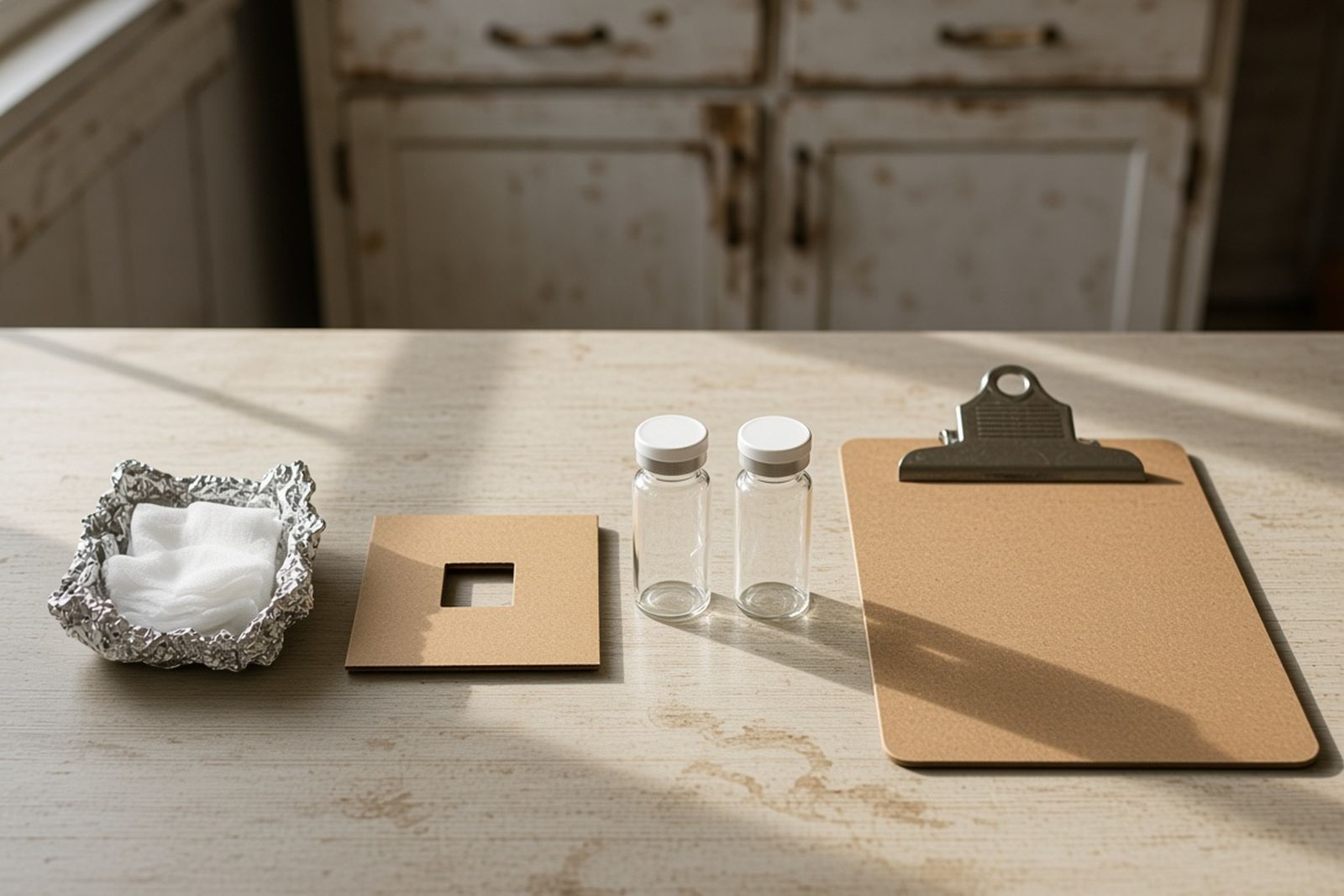
Wipe-sampling supplies on a counter: gauze in foil, a sampling template, vials and a clipboard
Illustrative photo, not a job record. Wipe-sampling supplies on a counter: gauze in foil, a sampling template, vials and a clipboard.
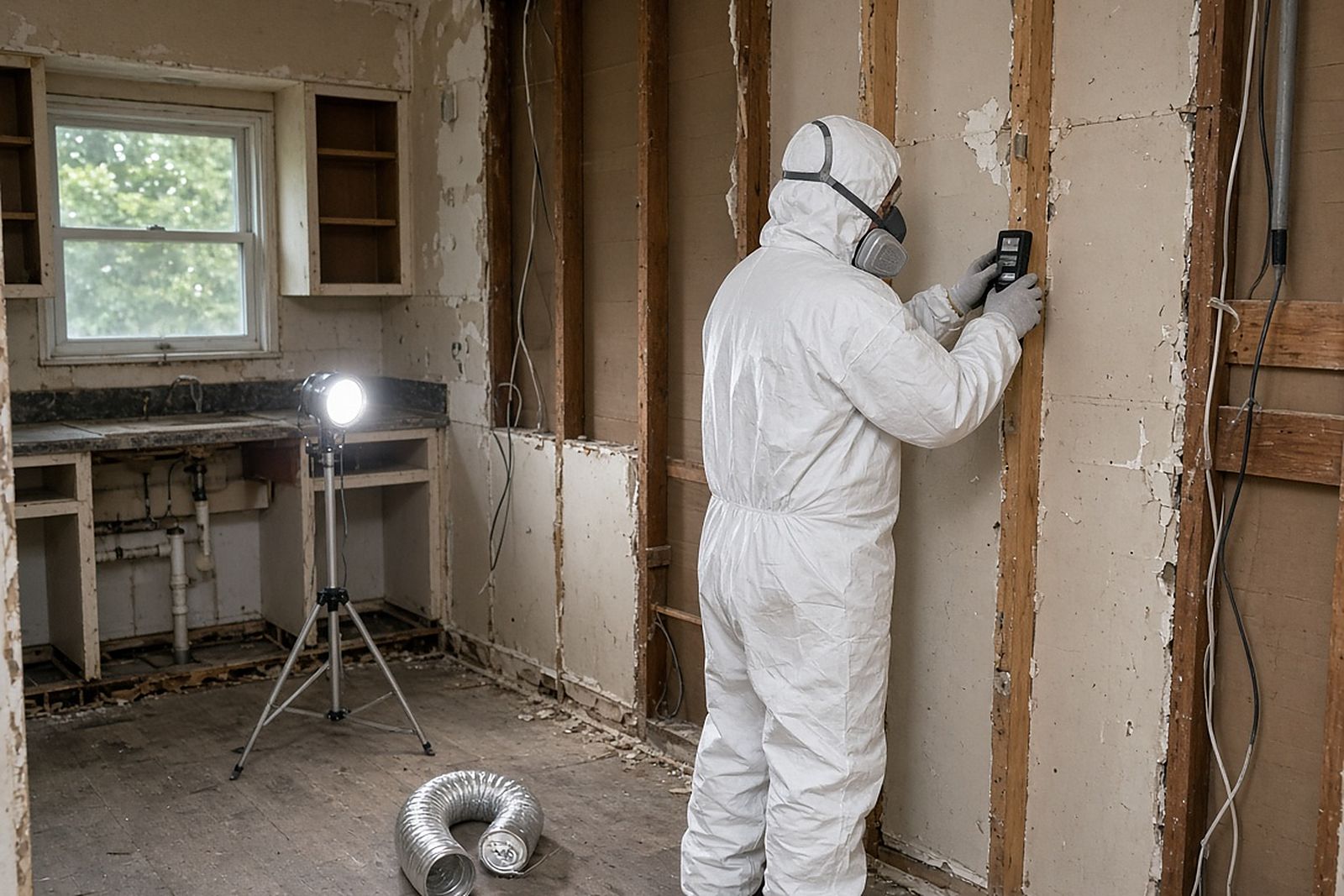
Technician in a respirator checking exposed studs in a gutted kitchen with a work light and duct
Illustrative photo, not a job record. Technician in a respirator checking exposed studs in a gutted kitchen with a work light and duct.

Meth Lab Cleanup figures to keep in mind

National and research figures, not Potomac data. Local conditions, rules and providers vary; use these for scale and context only.

NZ$10,300 to NZ$3,500

After New Zealand raised its residential meth contamination threshold in 2018, average tenancy-tribunal remediation awards fell from NZ$10,300 to NZ$3,500.

Read with care: New Zealand costs and legal context differ from the US.

Source: Journal of the Royal Society of New Zealand (2023)195 tribunal orders after 2018 vs 685 before, New Zealand

0.54

Wall-wipe concentrations ranged from 0.54 to 110 micrograms per 100 square centimetres.

Read with care: One property; no general prevalence or current clearance threshold inferred.

Source: Wright et al. (2019)One Australian home with suspected former manufacture, sampled more than five years later.

1.5 µg/100 cm²

Washington State's methamphetamine decontamination standard is 1.5 µg per 100 cm², which the state says was based on negative health effects found in people.

Read with care: Washington's limit is 15 times higher than the 0.1 µg standard used in several other states.

Source: Washington State Department of Health (2025)Washington State regulation

These figures are public research and agency data, not this network's own job records. Keep each number with its population, year and limits; none of them predicts cost, timing or outcome at a specific property.

Plan before you reach out

Use the first 24 hours planner for immediate steps and the provider vetting checklist to confirm any Potomac provider's training, insurance and waste path in writing.

What research has found

Findings from published studies of people and properties in situations like this one. They describe what researchers observed in a specific group; they are not predictions for your case.

Reported symptoms occurred across a broad range of measured surface residues.
Who was studied: 63 people in 25 selected residential exposure case studies.Limits: Selected cases; self-reported symptoms; cannot establish causation, prevalence or a safe threshold.Environmental Methamphetamine Exposures and Health Effects in 25 Case Studies (2020)
Methamphetamine was detected in every reported air sample.
Who was studied: Air sampling and contaminated-material experiments involving two properties.Limits: Limited properties and experimental conditions; modelled exposure is not observed illness.Current practices underestimate environmental exposures to methamphetamine: inhalation e… (2021)

Meth Lab Cleanup community polls

Poll results

Every count is a real visitor vote; nothing is seeded or padded. One vote per poll per device, and you can change your answer.

Your experience

If a house you wanted had a documented lab cleanup that passed clearance, what would you most likely do?

No visitor votes yet
Industry

Which factor would you weigh most when choosing a meth cleanup contractor?

No visitor votes yet

Planning cleanup in Potomac?

Send a short message about the property to the follow-up inbox. A coordinator can reply by email with next steps.

Your request is sent to the follow-up inbox. A coordinator can reply by email.

If anyone is hurt or in danger, call 911 first.