West · US

Meth Lab Cleanup in Sacramento, CA: Residue Sampling, Clearance, and Property Decisions

Planning meth lab cleanup in Sacramento, CA

Sacramento meth lab cleanup follows California's standard for moving back in. Testing should reach attics, garages, HVAC returns, and the rooms next door. This is planning guidance, not a claim of a local office or crew in Sacramento.

Get an email reply about meth lab cleanup

Send a short message to the follow-up inbox. A coordinator can reply by email. This form does not send emergency help; call 911 first if anyone is in danger.

Tell us what you need help with. Share a short description; please leave out medical details, access codes, and other sensitive information.

A request does not confirm a booking. For immediate danger, contact local emergency services.

Or email info@prompartybuses.com

Direct answer

The short answer for Sacramento, CA

In Sacramento, meth residue is a chemical cleanup job under California Health and Safety Code Chapter 6.9.1. It is not a paint-and-carpet turnover. A few things decide if a Central Valley rental, single-family home, or multi-unit address can be re-rented or sold with a file that holds up. These are the testing plan, choices about soft materials that soak up residue, and the paths through the heating and cooling (HVAC) system. Written lab results checked against the state standard for moving back in matter most.

Editorial guide · Biohazard Remediation NetworkUpdated 2026-07-22Location focus: Sacramento, CA

Local planning context

Sacramento sits in California's Central Valley. It has many single-family homes, older apartments near the downtown grid, and suburban rentals tied to state jobs. Meth residue questions here tend to start in one of three ways. Police may have been involved. A vacant unit may show signs of cooking. Or a landlord may find heavy drug-use debris while turning over a unit. Do not assume the 1.5 µg/100 cm² meth limit covers every kind of lab chemical. For Sacramento addresses on the chapter's pathway, that state law guides the clearance talk. Smell does not, and neither does a store-bought disinfectant wipe.

DTSC's Illegal Drug Lab Removal Program deals with bulk hazardous chemicals that police find. After those are hauled off, owners still must clean up the leftover residue and prove clearance on paper. Know the difference between a cooking lab and a place where meth was only used. Signs of cooking include solvents, raw ingredients, stained plumbing, cookware, and very strong acids or bases. Use-only sites have smoke residue that can still build up in soft goods and ducts. Cooking signs widen the testing and the waste work. Use-only sites still need wipe test data before anyone calls the unit clear for the next household.

Home sales in the Sacramento area often stall when a buyer, lender, or insurer asks for wipe results and a written cleanup story. Central Valley summer heat in a shut-up vacant home can make odors stronger. Odor is not the same as clearance. Winter rain and older HVAC systems can push fine dust through shared returns in duplexes and garden apartments. Residue can truly spread if crews dry-sweep, use regular vacuums, or pile dirty items in hallways. Before any tear-out or washing, plan to close off the unit. Use air filters and plastic walls that keep dust inside the work area. Set up separate paths for clean and dirty items. Keep your disclosure and landlord files honest. A cosmetic refresh without lab clearance does not meet California's indoor-surface standard.
Property considerations

Map the rooms where meth was cooked or used. Add nearby bedrooms, baths with stained fixtures, attics, and the garages found on many Sacramento lots. Residue often travels past the “obvious” room.

Check HVAC filters, returns, and the duct sections you can reach. Central Valley dust can hold meth particles after smoking or cooking and spread them again.

In duplexes and small apartment buildings, keep residue from moving between units. Seal openings and set up air filters and plastic walls that keep dust in the work area before any tear-out.

Expect anyone tied to a sale, refinance, or re-rental to ask for wipe results from an accredited lab. They will want them checked against California's HSC 25400.16 limits. For meth lab activity, that is 1.5 µg/100 cm² or less. For fentanyl lab activity, it is below detection until a health-based fentanyl standard is adopted. A spoken “clean enough” will not do.

Response-planning framework

Secure the site, find the problem, and set the testing plan

Wait until police release the scene and any bulk chemicals are removed through approved hazmat channels. Then record each room's condition with photos and a floor plan. A first testing plan should list where wipes will be taken. Good spots include hard surfaces people touch often, HVAC returns, and floor areas where children play. The plan should say if samples are pooled or kept separate. It should also cover chain-of-custody, the signed record of who handled each sample, and the accredited lab's method. In Sacramento, match your pass mark to Health and Safety Code section 25400.16 when the property is on the meth or fentanyl lab pathway. If the lab used lead or mercury compounds, add those limits from the same section.

Close off the area, remove soft items, and wash with detergent

HEPA vacuums, which have very fine dust filters, belong in the steps. Dry sweeping and household vacuums stir the fine dust back up. Decide on belongings from a written list. Save only items that can be cleaned and tested again. Throw out items that hold residue like a sponge.

HVAC and cross-spread controls

Sacramento duplexes and garden apartments often share attic space and air returns. Residue can spread from unit to unit through both. Put dirty materials in sealed containers. Carry them outside along one set path.

Final testing, records, and moving back in

Check results against California's limits in HSC 25400.16. For meth lab activity, the limit is 1.5 µg of meth per 100 cm² or less. Lead and mercury limits also apply when those compounds were used. For fentanyl lab activity, results must be below the detection level until a health-based fentanyl cleanup standard is adopted. Any spot that fails needs more washing or removal. Then it gets tested again.

Documentation checklist

  1. 1Floor plan showing planned and final wipe-sample spots
  2. 2Written first site check and cleanup work plan
  3. 3Chain-of-custody forms and accredited lab wipe reports for the chemicals that apply (meth, fentanyl, or both)
  4. 4Notes on HVAC filter changes and duct access
  5. 5Final clearance or “no further action” letters kept in the permanent property file

Official resources

Questions for this location

What clearance number applies to meth residue in Sacramento, California?

Beyond the meth limit, the same section adds two more limits if the lab used lead or mercury compounds. Lead must be 20 micrograms per square foot or less. Mercury in the air must be 50 nanograms per cubic meter or less. Do not accept a contractor's casual “looks clean” call in place of lab wipe tests. A sniff test will not do either. Neither will a quick swab test that shows leftover organic residue (it does not detect germs). Keep the lab report with sample spots marked on a floor plan. Then Sacramento buyers, lenders, and future tenants can check the claim.

Is heavy meth use in a Sacramento rental the same as a lab where the drug was made?

No. A cooking lab often leaves raw ingredients, solvents, acids or bases, reaction jars, and chemical stains. These widen the waste review. Under California's statute, they may also call for lead or mercury testing if those compounds were part of the process. Use-only sites can still leave meth dust on walls, floors, soft goods, and HVAC parts. This is most true in shut-up Central Valley vacant units. But the chemical mix and the amount of tear-out often differ. A sound Sacramento response still starts with a written testing plan. Do not assume a sweep for needles or a coat of paint cleared the unit. If signs of cooking show up during the check, step up the plan right away. At a use-only site, soft materials and ducts may still fail wipe tests. They may need removal or deep washing before re-rental. Write down which case you think applies and why. Disclosure and insurance talks follow that difference.

Why do HVAC systems and soft materials matter so much in Sacramento homes?

Meth residue acts like fine dust. It can settle into carpet fibers, pad, upholstery, raw wood, and dusty return paths. Many Sacramento homes have older forced-air systems, attic returns, and heavy summer dust. So smoke or cooking residue can spread again each time the fans run. Soft materials often cannot be washed clean enough to pass. They become lasting sources that soil the hard surfaces you just cleaned. That is why testing plans should include HVAC spots. It is also why a bid that skips ducts and filters is not complete. Residue also spreads when dirty items are carried through clean rooms, or when regular vacuums throw dust into the air. Plan how you will close off the area, use HEPA tools, and choose what gets removed before washing starts. Clearance wipes taken after the HVAC work and removals are what support moving back in. Fragrance or ozone used as a shortcut does not.

What should a Sacramento landlord or seller keep for disclosure and sales?

Mark sample points on a floor plan. That way a buyer or property manager can see that kitchens, bedrooms, baths, and surfaces near the HVAC were tested. California's limits for moving back in give everyone involved a clear benchmark. Without the lab file, claims that a home was “fully remediated” are hard to back up. Do not re-rent after only a first coat of paint when a lab or heavy use is suspected. If a sale is pending, tell the buyer the truth about known contamination and where the cleanup stands. Do not lean on how the unit looks.

Can Sacramento property owners clean up meth contamination themselves?

Even before any formal order is issued, washing it yourself without a testing plan has risks. It can spread residue and leave gaps in your waste records. It can also fail later wipe tests that buyers or agencies ask for. Children and other sensitive people should not stay in the unit during cleanup. They should wait until clearance testing supports moving back in. If you find what may be lab waste, call the police. Do not move the containers yourself. DTSC's program guidance stresses that abandoned lab chemicals are hazardous and need trained workers.

How does Sacramento's summer heat affect the timing of meth residue work?

Valley summers often pass 100 degrees. A shut-up Sacramento house can become unsafe for a crew in full protective gear by early afternoon. Plan tear-out and bagging for the morning. Keep the home's HVAC off during work. Use portable cooling that does not blow dirty air back around the rooms. Heat can make leftover odor seem stronger, but that is not the same as a failed test. Schedule final wipes after surfaces have dried and settled. Then the lab data shows real conditions.

What should a Sacramento tenant do if they think a past tenant cooked or smoked meth?

Write down what you notice. This could be lingering chemical smells, stained fixtures, or headaches you can't explain. Share it with your landlord in writing. Ask if any wipe testing was done before you moved in. If you are worried about children or symptoms, talk with your doctor. You can also contact the Sacramento County environmental health office for guidance. Don't scrub or sand surfaces yourself, since that can spread residue. A written request creates a record if testing or a move becomes needed.

Contact

Get help by email

Send a short message for an email reply about meth lab cleanup planning questions for the Sacramento area.

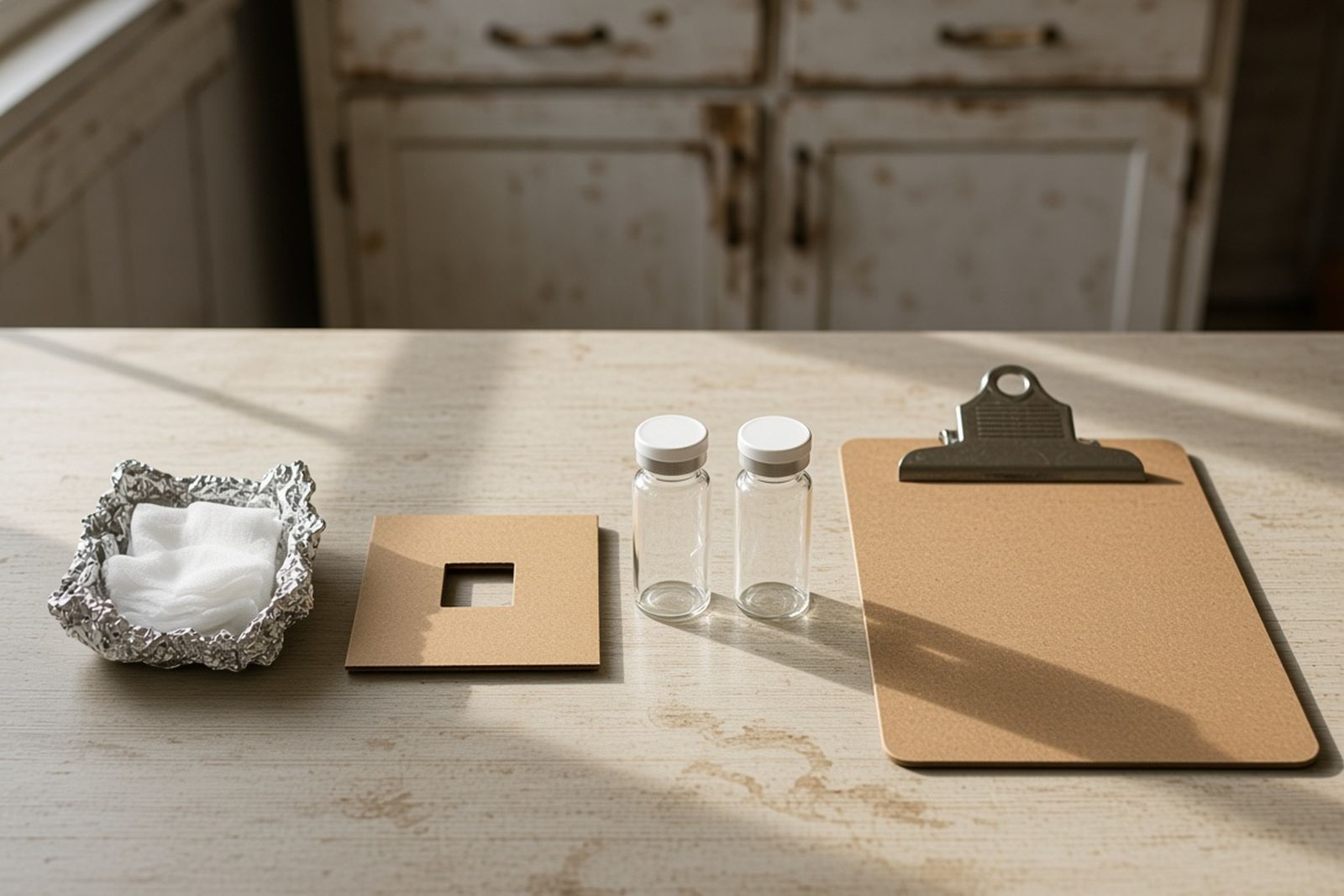
Wipe-sampling supplies on a counter: gauze in foil, a sampling template, vials and a clipboard
Illustrative photo, not a job record. Wipe-sampling supplies on a counter: gauze in foil, a sampling template, vials and a clipboard.
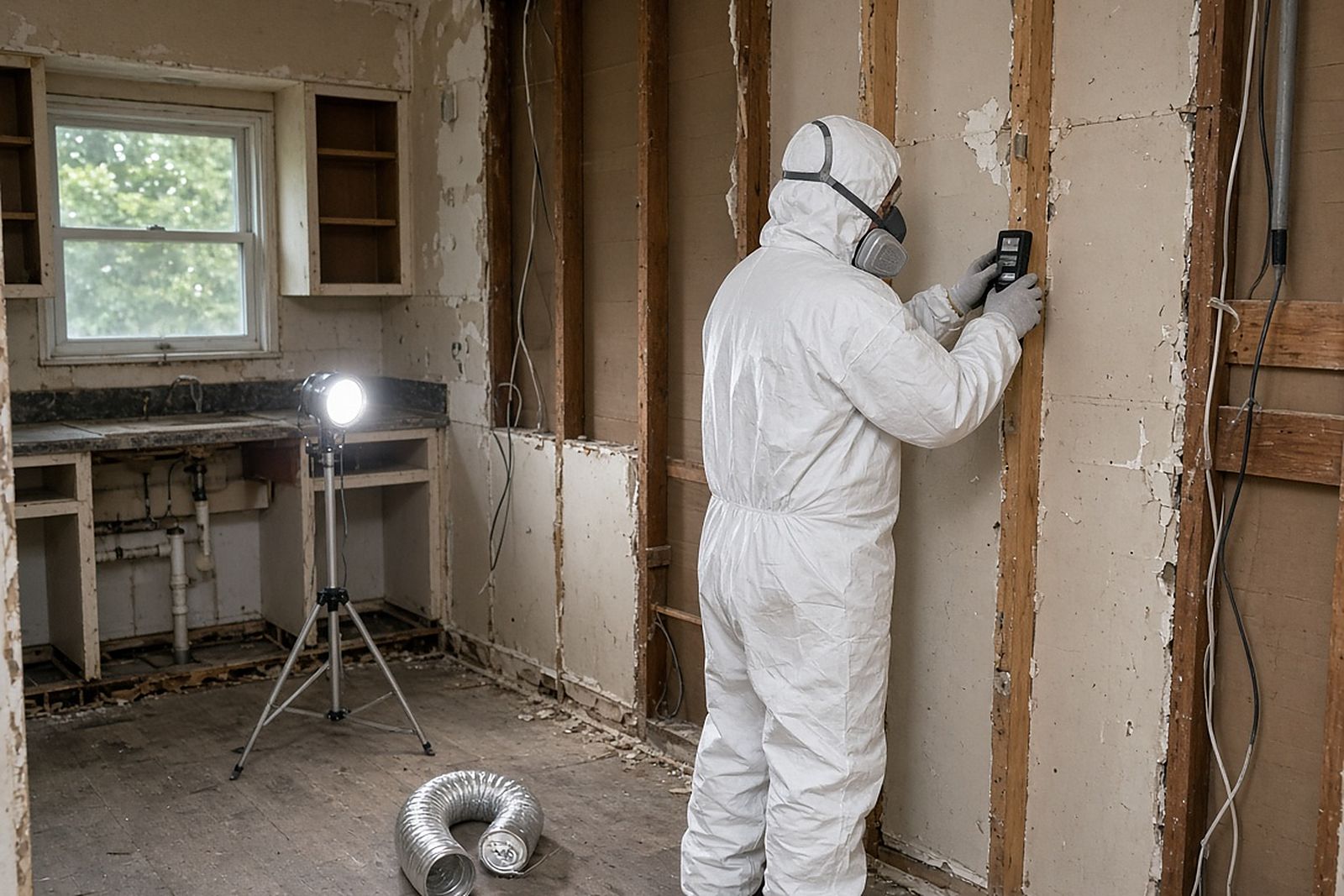
Technician in a respirator checking exposed studs in a gutted kitchen with a work light and duct
Illustrative photo, not a job record. Technician in a respirator checking exposed studs in a gutted kitchen with a work light and duct.

Meth Lab Cleanup figures to keep in mind

National and research figures, not Sacramento data. Local conditions, rules and providers vary; use these for scale and context only.

63 people, 25 case studies

A study of 63 people across 25 homes contaminated by prior meth manufacture or use found behavioral, sleep, respiratory, skin and eye effects and headaches, with no difference between manufacture and use cases.

Read with care: Case series without a control group; symptoms were self-reported.

Source: Toxics (Wright et al.) (2020)Australian case series of unknowing residents

23,700 (2004) vs 60 (2023)

DEA's El Paso Intelligence Center documented 23,700 clandestine meth lab seizures in 2004, compared with only 60 reported lab seizures in 2023.

Read with care: Seizure counts reflect enforcement reporting and exclude thousands of older contaminated properties never remediated.

Source: National Association of Realtors (citing DEA National Drug Threat Assessment 2025) (2025)United States, DEA-reported lab seizures

25 states; 0.05–1.5 µg/100 cm²

As of March 2013, 25 states required or recommended that former meth labs be cleaned to standards ranging from 0.05 to 1.5 µg of methamphetamine per 100 cm².

Read with care: Some states have since added or changed standards; a 30-fold range means 'clean' differs by state.

Source: Ohio Department of Health (2016)US states, per EPA 2013 summary

These figures are public research and agency data, not this network's own job records. Keep each number with its population, year and limits; none of them predicts cost, timing or outcome at a specific property.

Plan before you reach out

Use the first 24 hours planner for immediate steps and the provider vetting checklist to confirm any Sacramento provider's training, insurance and waste path in writing.

What research has found

Findings from published studies of people and properties in situations like this one. They describe what researchers observed in a specific group; they are not predictions for your case.

Methamphetamine was detected in some residents' hair samples, including children's samples.
Who was studied: 63 people in 25 selected residential exposure case studies.Limits: Selected cases; self-reported symptoms; cannot establish causation, prevalence or a safe threshold.Environmental Methamphetamine Exposures and Health Effects in 25 Case Studies (2020)
Air movement provided a potential route for residue redistribution within a property.
Who was studied: Air sampling and contaminated-material experiments involving two properties.Limits: Limited properties and experimental conditions; modelled exposure is not observed illness.Current practices underestimate environmental exposures to methamphetamine: inhalation e… (2021)

Meth Lab Cleanup community polls

Poll results

Every count is a real visitor vote; nothing is seeded or padded. One vote per poll per device, and you can change your answer.

Your experience

If a house you wanted had a documented lab cleanup that passed clearance, what would you most likely do?

No visitor votes yet
Industry

Which factor would you weigh most when choosing a meth cleanup contractor?

No visitor votes yet

Planning cleanup in Sacramento?

Send a short message about the property to the follow-up inbox. A coordinator can reply by email with next steps.

Your request is sent to the follow-up inbox. A coordinator can reply by email.

If anyone is hurt or in danger, call 911 first.