Great Neck, NY

Meth Lab Cleanup in Great Neck, NY: Manhasset Bay Co-ops and Transfer-Agent Lab Files

What to do, who to contact, and what to ask in Great Neck.

Meth residue in a Great Neck co-op or house? New York has no state meth limit. See what your board, transfer agent and lab file will need from you.

Get an email reply about meth lab cleanup

Send a short message to the follow-up inbox. A coordinator can reply by email. This form does not send emergency help; call 911 first if anyone is in danger.

Tell us what you need help with. Share a short description; please leave out medical details, access codes, and other sensitive information.

A request does not confirm a booking. For immediate danger, contact local emergency services.

Or email info@methlabcleanup.online

The short answer for Great Neck, NY

If meth residue is suspected in your Great Neck co-op or house, pause any paint or renovation work and ask for surface wipes from an accredited lab. New York has published no meth limit for moving back in. So your pass level has to be written down and attached to your contract or board file before cleanup starts.

What to do, step by step

  1. 1

    Gather approvals and get a wipe exhibit written

    Start with your managing agent. Collect the renovation approvals, insurance papers and elevator bookings before any wall is opened. Then ask the testing company for a wipe exhibit that names the lab methods, detection limits and what triggers removal. EPA’s technical document can give ideas on the order of work. The exhibit should say plainly that New York has not adopted a meth limit. If your board sets a pass level, attach it as a contract exhibit. Stop cosmetic work that could bury residue until then.

  2. 2

    Check how bags will reach the elevator and trash room

    A good crew will seal your apartment, cover the hallways and bag debris before it goes into elevators or trash rooms. Soft finishes that washing cannot bring to your written pass level are removed. If solvents are present, expect the waste to be tested and sorted first. Ask the crew to take photos of the clean and dirty zones as they go. Your transfer agent may want those photos in the file, and they show your neighbors were protected.

  3. 3

    Have the PTACs, bike cage and basement protected

    Ask that your PTACs be turned off, then checked to see how much residue the coils and filters hold. Openings to the basement bike cage and trash chutes should be capped during tear-out. Carts should be cleaned before they leave the sealed area. A good crew’s safety plan covers leftover solvents and fine dust. Shared basement mechanical rooms spread dust if they are left open to the work zone, so ask how yours will be closed off.

  4. 4

    Build the package your transfer agent will keep

    Ask for the pages to be set up the way co-op transfer agents expect. The file records the conditions of your job. It does not show that you met a state limit, because there isn’t one, and it should say so. Any PTAC return or room that failed needs a second wipe on file. Do not accept odor machines or paint bills in place of lab proof. Keep a full copy yourself, since your board may store only part of it.

What cleanup is like in Great Neck

Great Neck’s peninsula villages mix mid-rise co-ops facing Manhasset Bay, postwar garden courts and single-family homes near the Port Washington Branch. You may have learned of the problem when your board froze renovation work after an empty apartment line showed smoking debris. Maybe a super found chemical stains in a basement bike cage, or a transfer agent asked for environmental letters before shares could change hands. California has a surface limit for meth in Health and Safety Code section 25400.16. New York has not adopted one. So you, your board and your buyer should agree in writing on detection limits, how many samples to take and what gets thrown out.

The Nassau County Department of Health takes many environmental health questions, and New York State DEC comes in when chemically tainted debris leaves the building. In daily life, though, your co-op’s house rules and renovation agreement will shape the job more than any meth law. They often control elevator padding, work hours and trash room paths. Tell the company what was found. Solvent cans, etched glassware or stained laundry tubs point to cooking and widen the waste review. Smoking with foil and pipes can still soak carpet, plaster and PTAC wall unit coils in a sealed apartment line.

Resales on the peninsula run on paperwork packages. Your board, the transfer agent and the lender will ask for lab maps, even though New York has no meth limit. Old co-op plaster and carpet rarely come clean with a quick wash, so do not agree to a paint-and-go job before your wipe plan is written. Bike cages, trash rooms and shared basement storage can spread dust when bags travel uncovered between floors. Share the results for your unit as they are. Nobody can hand you a state clearance certificate, because none exists.

What to expect for your type of home

  • Co-op apartments: Ask that wipe spots line up with your renovation papers. That means the galley kitchen, baths, bedrooms and PTAC returns, plus the bike cage if your unit’s items were stored there.
  • Buildings with elevator rules: Budget for elevator pad deposits and sealed-cart rules before any soft items leave your apartment line. Ask your managing agent for these costs in writing so nothing surprises you later.
  • Older carpeted units: If early samples show residue, expect carpet, pad, drapes and soft cabinets to be thrown out first. Ask which hard surfaces the company thinks it can wash and keep.
  • Apartments with PTAC wall units: Ask if each PTAC serves only your unit. Also ask whether hallway fresh air could spread dust to neighbors during tear-out, and how the crew will block it.
  • Units with signs of cooking: Tell the company about any vessels or chemical cans. These should be kept apart from smoking foils before the waste is sorted, because they are handled under different rules.
  • Co-op sales: New York gives no meth limit to point to. Ask your board or transfer agent to put its pass level in a contract exhibit, and sign it before cleanup begins.

Papers and records to keep

  • Your managing agent’s renovation approval, plus the elevator and trash room plan
  • The signed wipe exhibit and proof the lab is accredited
  • A floor plan sample map that includes bike cages and PTAC returns
  • Lab results for your apartment line, each with its signed custody form
  • Photos of how the hallway and elevator were protected
  • List of soft items removed and the waste papers for your board file
  • Service notes for the PTAC filters and coils
  • A memo for your board and transfer agent stating the pass level set for your unit

Local offices and official help

Common questions in Great Neck

Does New York have a meth limit my co-op must meet before I move back in?

No. New York has no indoor surface limit for meth like California Health and Safety Code section 25400.16. EPA’s technical document is a practice guide, not a federal rule with a number. Your board should set the pass level in a wipe exhibit that lists the accredited lab, each mapped spot and the detection limits. Agree on it with any buyer, lender or agency that has its own needs. If an agency issues a written order for the site, it outweighs what a contractor tells you.
How will my building’s renovation agreement affect the cleanup?

It decides how debris moves. Renovation agreements often set elevator hours, insurance limits and trash room paths. Dirty mattresses and carpet cannot ride passenger elevators uncovered without spreading residue to other floors. Your board may require sealed carts, padded elevators and after-hours moves. Testing should still reach kitchens, baths, PTACs and bike cages, even if the room of use was a bedroom. Ignoring house rules can halt work midway and leave residue paths untreated.

What will the transfer agent want to see after the work is done?

Expect to hand over the wipe exhibit, the lab’s accreditation and results with detection limits. Peninsula transfer agents also want maps, waste papers, PTAC notes and a short summary of cooking or smoking. A complete packet matters more than any line quoting an invented limit. An ozone certificate or a painter’s bill will not satisfy them. Ask for retest records after any failed sample, and keep it all with your resale records.

Only foil and pipes were found. Do I still have to plan for hazardous waste?

Yes, though the load is usually smaller. Smoking with foil creates less waste than a full cook. But soft items and dust can still fail wipe tests, and they must leave in sealed bags. Cooking solvents widen the waste testing under New York State DEC and RCRA rules. Have the company write down which case applies. Keep kids out of the apartment until post-cleanup wipes reach the level written in your plan.

How should my board use EPA’s technical document?

Use it to shape questions, not to quote a law. It helps you ask about soft materials, HVAC, how many samples to take and the order of cleanup. It did not create a Nassau County microgram law, and EPA does not require a set microgram value for New York. Pair it with a written pass level for your job and any agency orders that carry legal force. Plain wording that “no state limit has been adopted,” plus lab maps, lets you move forward honestly.

I own a single-family house in Great Neck, not a co-op. Who decides the pass level?

You do, along with anyone who has a stake in the house. Without a board, you have more freedom but also full responsibility for the file. Hire an independent assessor and agree on a written pass level. Keep the results for any future sale. Older homes near the water may have finished basements or sunrooms that need their own sample spots. For general questions, try the Nassau County health department.

Will traffic near the Great Neck station affect when debris is hauled?

It can. Streets near the Great Neck LIRR station and the village centers get busy at rush hour, and parking is tight. Ask the crew to load trucks mid-morning or early afternoon when they can. Check any village rules for placing a container. Sealed bags should stay inside until the truck is ready, so they never sit on the sidewalk. A covered path from the door to the truck keeps the work low-key for your neighbors.

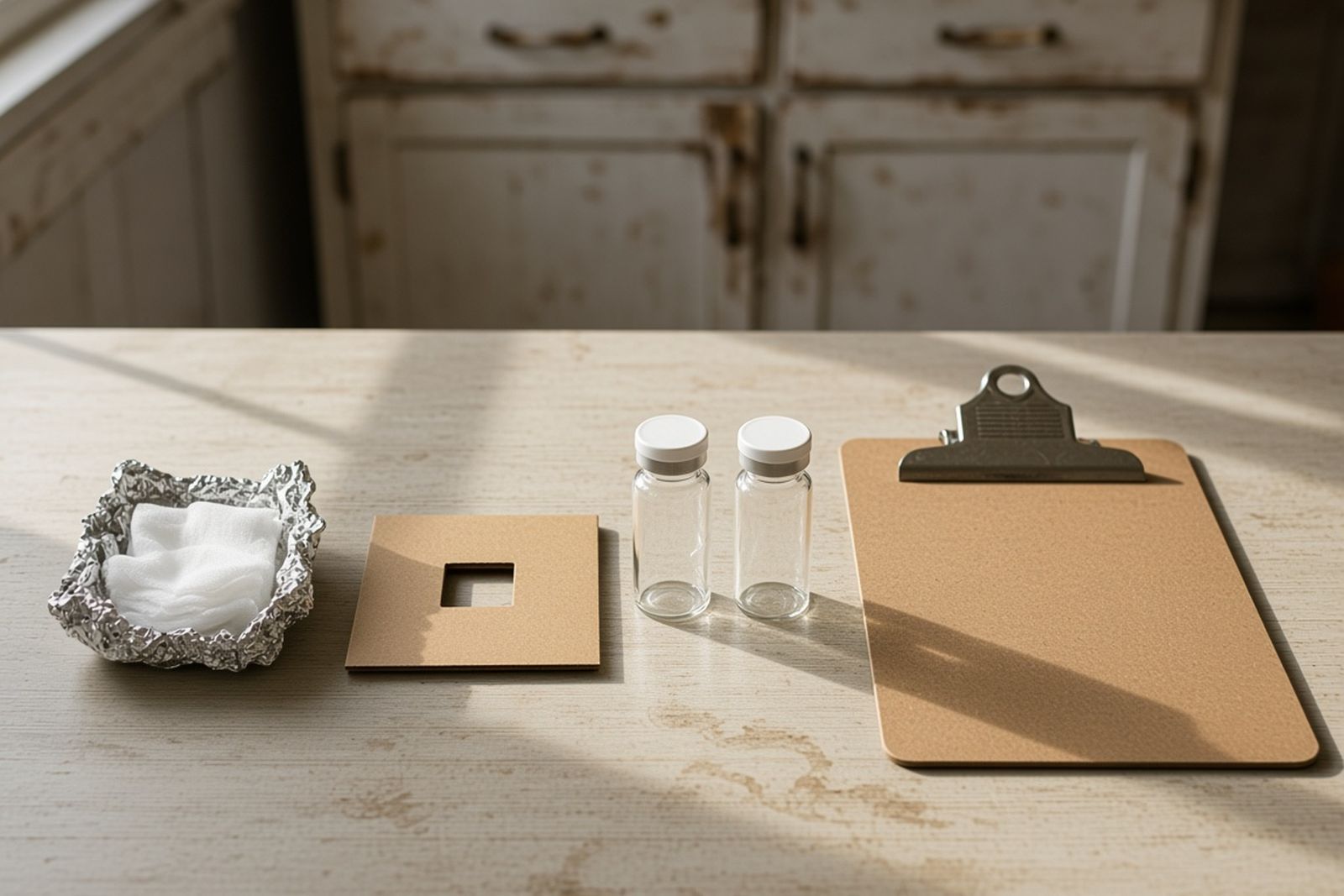
Wipe-sampling supplies on a counter: gauze in foil, a sampling template, vials and a clipboard
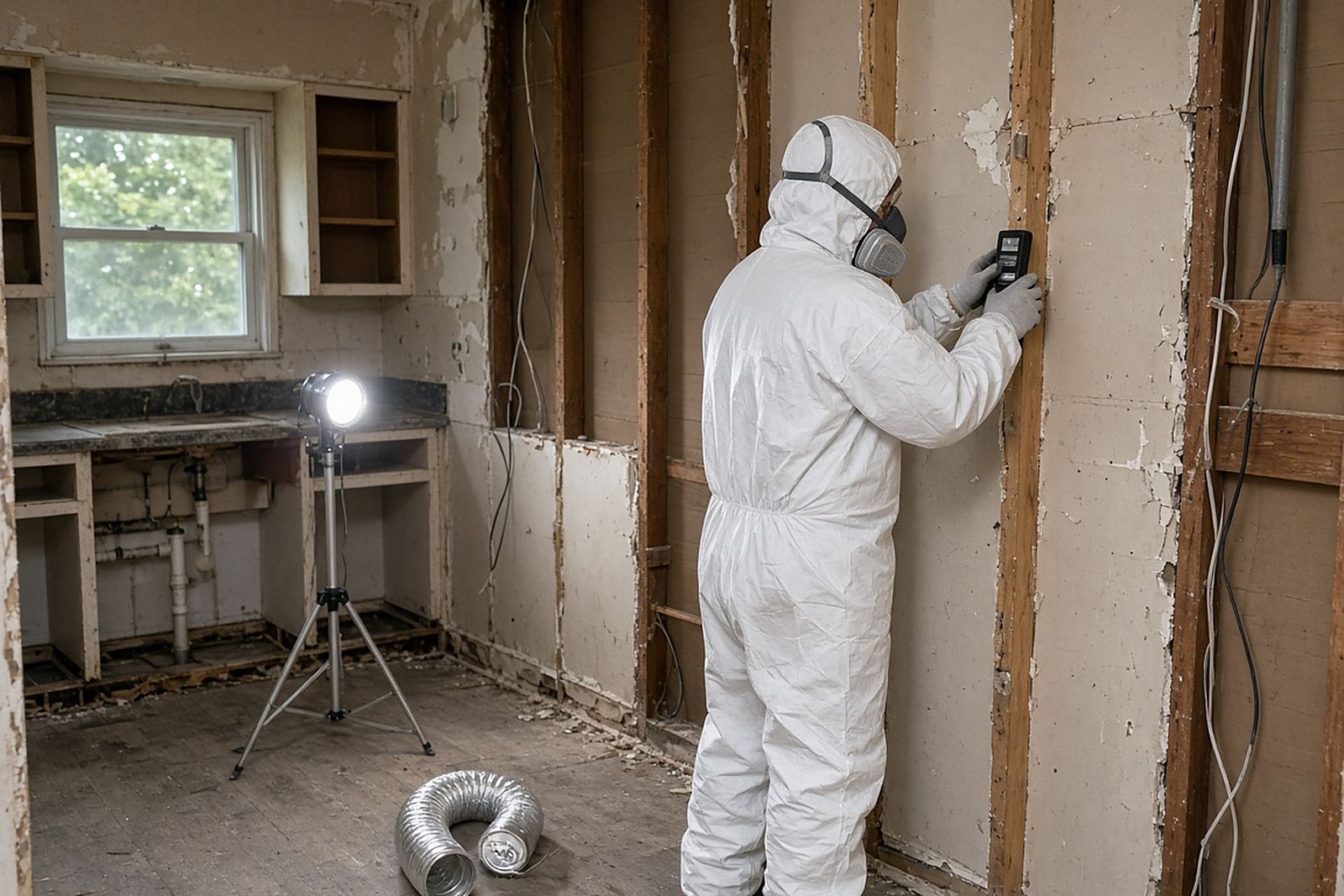
Technician in a respirator checking exposed studs in a gutted kitchen with a work light and duct

Facts worth knowing

  • In one Australian family living in a former meth lab, the 7-year-old's hair held 460 picograms of meth per milligram, versus 17 for the mother and 5 for the father.

    Why it matters: Young children may absorb far more residue than adults, so consider keeping your children out until the home tests clean.

    Source: CDC MMWR, 2016

  • Washington State requires meth-contaminated properties to be cleaned down to 1.5 micrograms of meth per 100 square centimeters of surface.

    Why it matters: If your property is in Washington, ask for final test results at or below this level; other states often use stricter limits.

    Source: Washington State Department of Health, 2025

  • Oregon meth lab cleanups, as reported by Ohio's health department in 2016, averaged $6,500 per 1,000 square feet plus a $1,400 up-front assessment.

    Why it matters: Expect to pay for testing before cleanup starts, and treat these older figures as a rough guide, not a quote for your property.

    Source: Ohio Department of Health, 2016

Tools that help right now

What would you do?

Poll results

Vote to see how other people answered. You can change your answer at any time.

Your experience

If a house you wanted had a documented lab cleanup that passed clearance, what would you most likely do?

Be the first to vote
Industry

Which factor would you weigh most when choosing a meth cleanup contractor?

Be the first to vote

Need help in Great Neck?

Send a short message about the property to the follow-up inbox. A coordinator can reply by email with next steps.

Your request is sent to the follow-up inbox. A coordinator can reply by email.

If anyone is hurt or in danger, call 911 first.