Short answer
DIY cleanup of a former meth lab is rarely a good idea. Residue is invisible, soaks into porous materials and can only be confirmed gone through laboratory testing, and many jurisdictions require certified contractors, approved work plans and independent clearance sampling. Owners can help by securing the property, avoiding disturbance, arranging testing and handling paperwork, while trained crews do the remediation itself.
A project with no visible finish line
Most home projects have a visible finish line. You can see when paint is even, when grout is clean or when a stain is gone. Meth residue does not work that way. It is usually invisible, it has no reliable smell once a lab has been inactive for a while and it can remain on and inside surfaces for years.
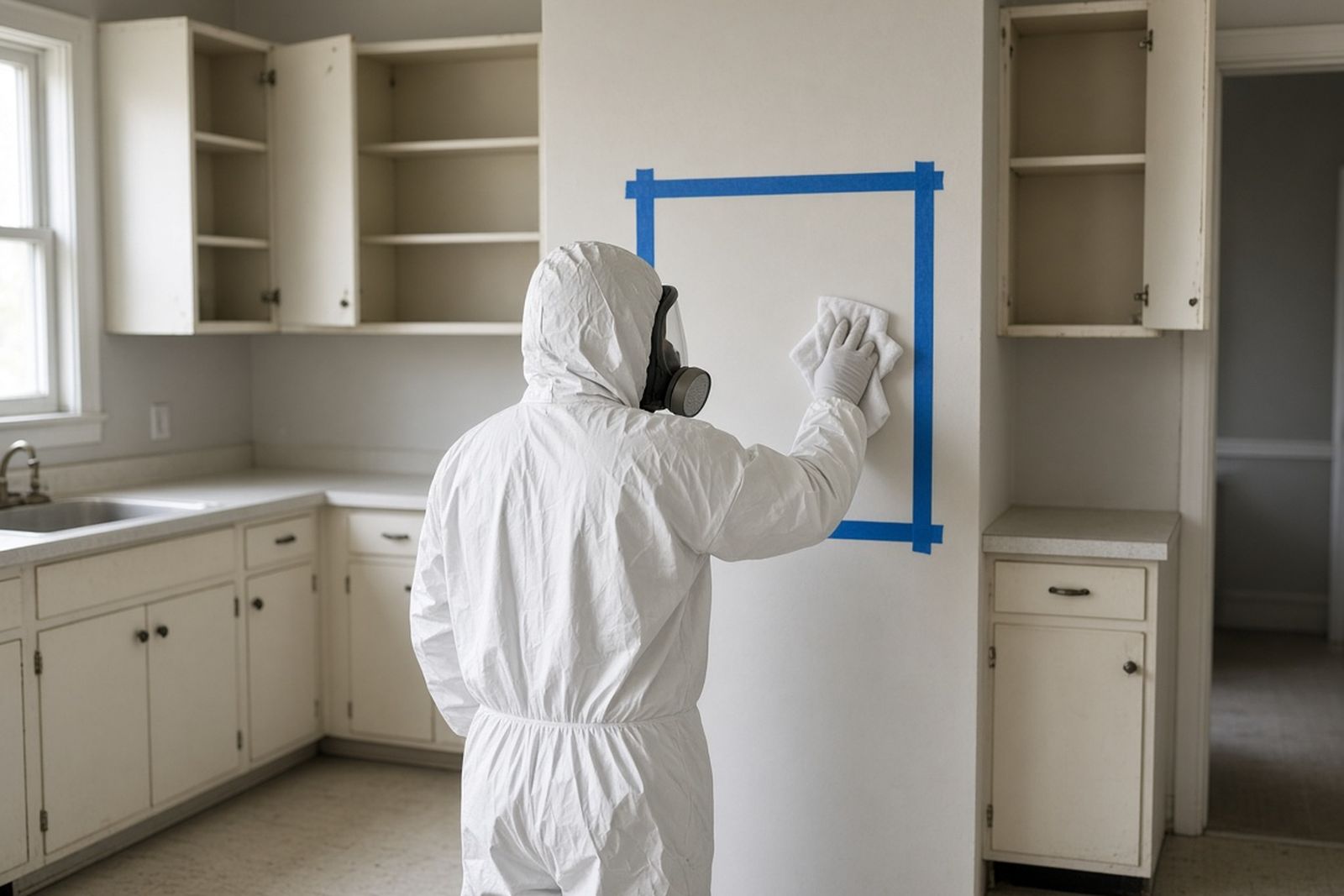
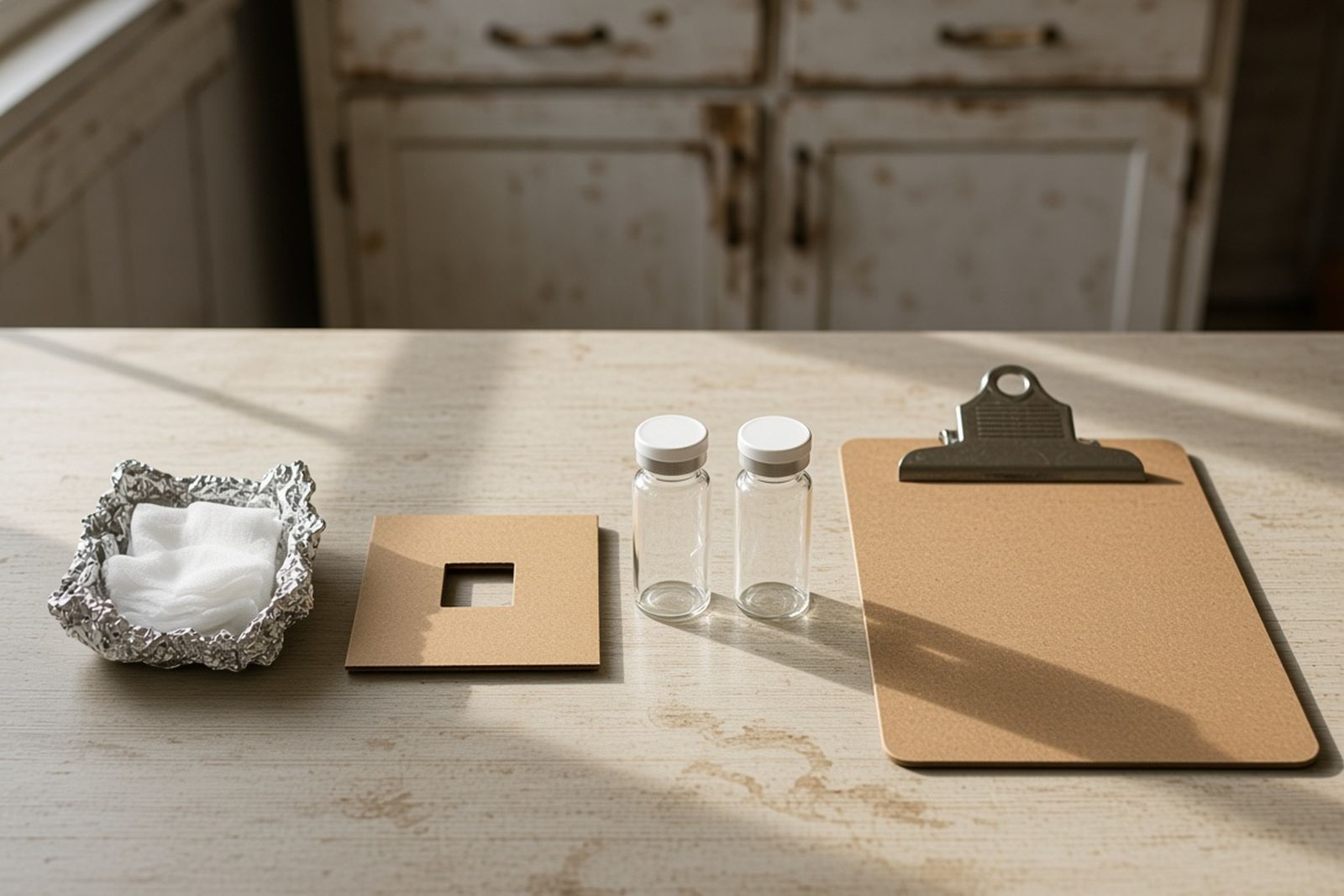
Because of that, the only way to know whether a property is clean is to test it. Cleanup is judged against a numeric limit, measured by wipe samples analyzed at a laboratory. A home can look spotless and still fail. That fact alone changes the DIY calculation.
Former labs may also contain residues of solvents, acids, bases and other chemicals used in production. Those substances can be corrosive or irritating, and they call for protective equipment and handling that most homeowners do not have.
Contamination from smoking, rather than cooking, is sometimes treated as a lighter problem that an owner can handle alone. Levels from use are often lower than from manufacture, but not always, and the only way to know is to measure. A heavy-use property can exceed a cleanup limit just as a small lab can.
Are you even allowed to clean a meth lab yourself?
In many places, the answer is no, or not without significant conditions. States and localities with formal programs may require that remediation be performed by certified or approved contractors, that a work plan be filed before work starts and that clearance sampling be done by an independent, qualified sampler.
Other places have no specific rules. That does not mean DIY is safe, only that the law is silent. Owners in those areas are still exposed to liability if a future tenant or buyer is harmed or if the contamination is discovered later.
Before anyone touches a surface, call the drug-lab program at your state health department, or your county environmental health office if the state has no program, and ask whether the property is on a restriction list, who is allowed to perform remediation and what documentation is required before it can be occupied, rented or sold.
Even where owners are permitted to do some of the work, the clearance step usually still has to be performed or verified by a qualified person. That means any shortcut you take during cleaning will be exposed at the end, and you may pay for professional remediation after spending time and money on your own attempt.
Seven ways DIY cleanup goes wrong
The most common DIY approaches tend to fail for predictable reasons.
Home test kits sold online add to the confusion. Some give only a positive or negative result at a set detection level, which may not match the limit that applies to your property. They can be a useful early signal, but they do not replace sampling by a qualified person and analysis by an accredited laboratory.
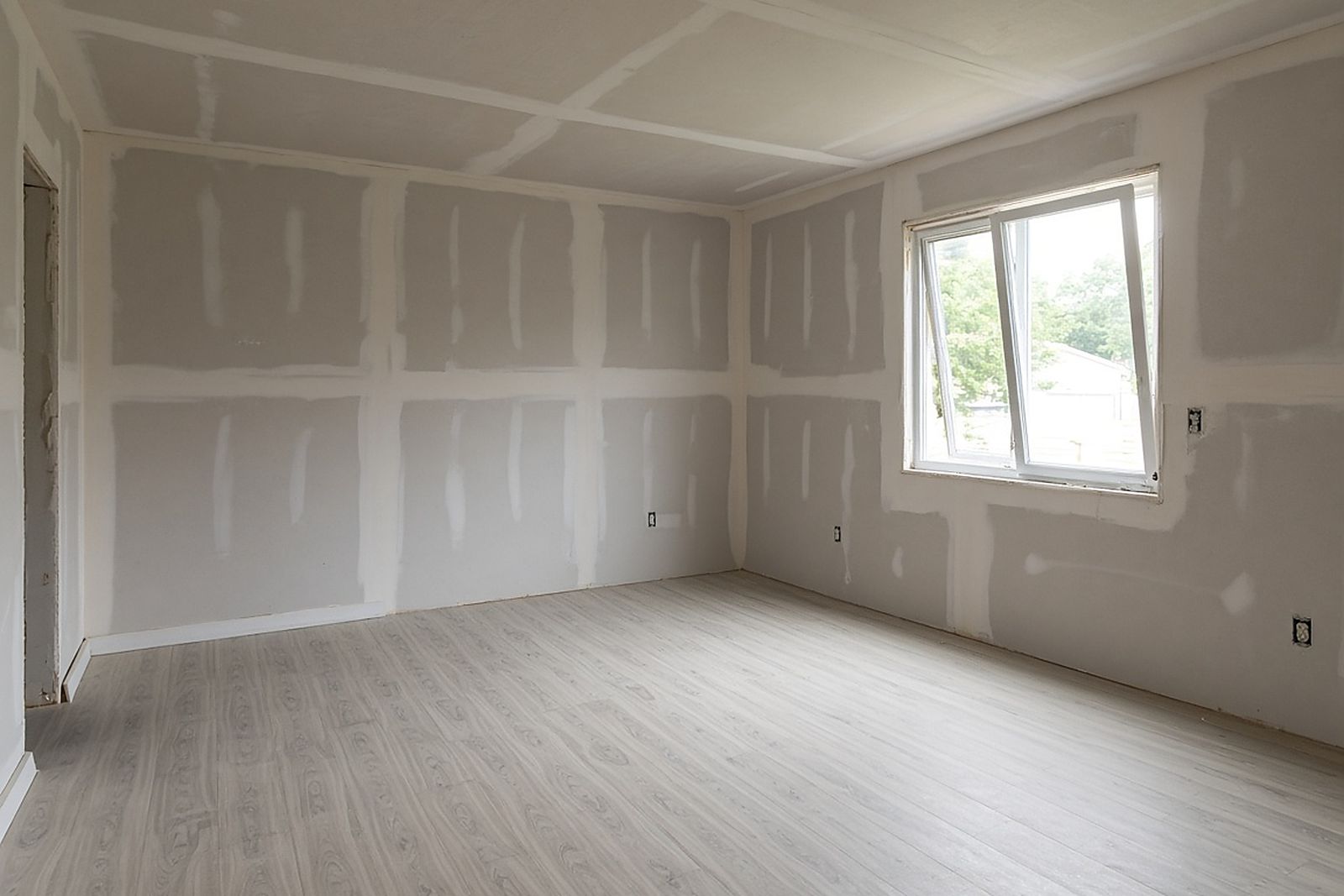
- Painting over walls hides stains and odors but can leave residue underneath and complicate later testing.
- Shampooing carpet may move residue deeper into the pad and subfloor rather than removing it.
- Ordinary vacuums can blow fine contaminated dust back into the air.
- Washing without changing water and wipes frequently spreads residue from one surface to another.
- Ignoring HVAC systems allows ducts to redistribute contamination every time the system runs.
- Pouring cleaning water down drains can add to residues already present in plumbing.
- Skipping clearance testing leaves no evidence that the property is safe.
Health and safety risks of doing it yourself
Exposure during cleanup is a real concern. Residue can be absorbed through the skin, ingested from hands or inhaled in dust. Chemicals left from production can burn skin, irritate eyes and lungs or react with cleaning products.
Active or recently abandoned labs carry even more serious hazards. A 2015 CDC MMWR report found that five states reported 1,325 meth-related chemical incidents from 2001 to 2012, and 87 of them injured 162 people, including at least 26 children. If you find containers, tubing, glassware or chemical smells, leave immediately and contact law enforcement. Bulk chemicals are removed by trained responders, not by owners.
Even in a property where bulk materials have long been removed, children and pregnant people should stay away from the space during any work. Clothing worn inside should be bagged and washed separately.
What a professional crew does that a homeowner cannot
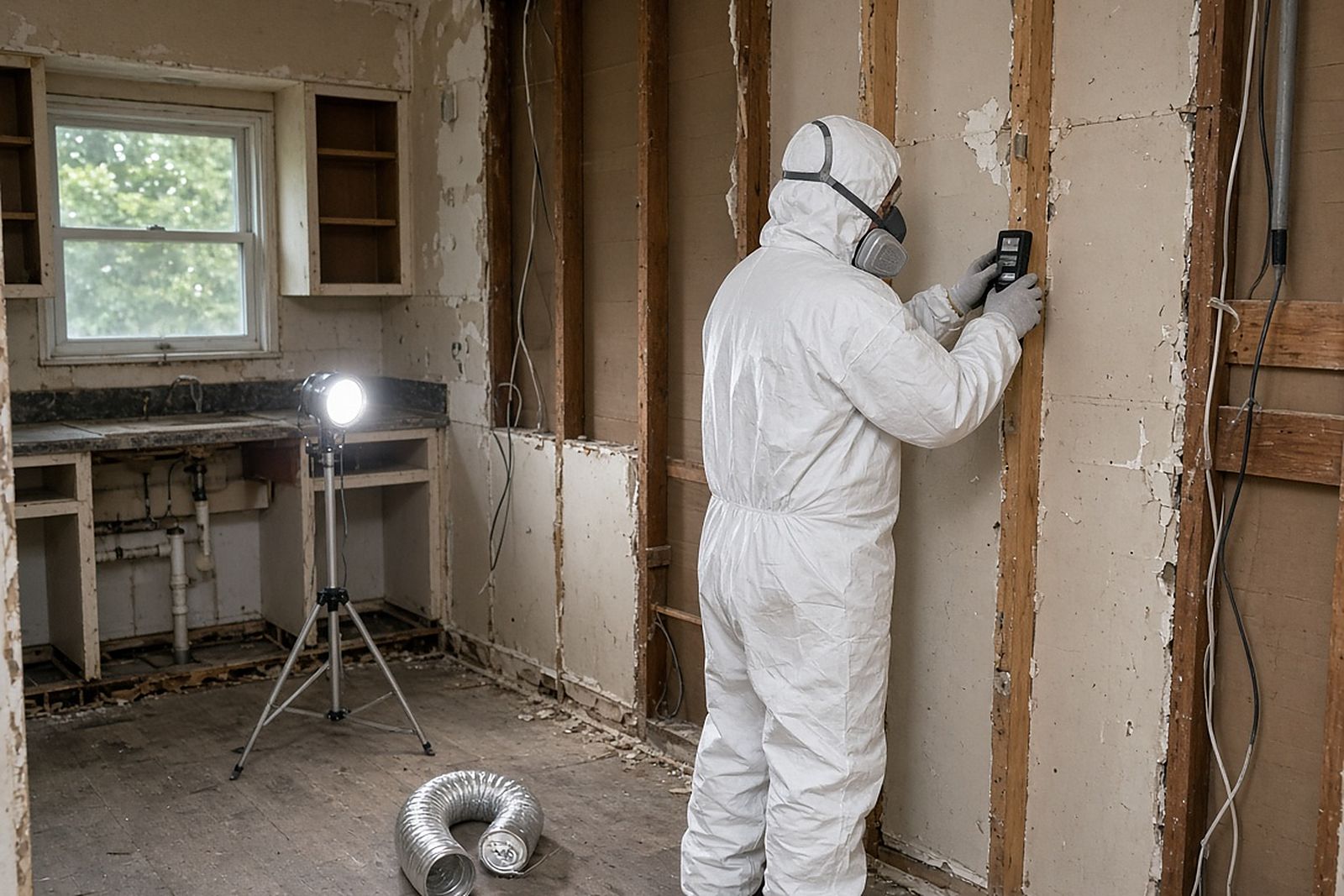
Professional remediation starts with a preliminary assessment and wipe sampling to map contamination. The contractor then writes a work plan that specifies which surfaces will be cleaned, which materials will be removed and how the HVAC system and plumbing will be handled.
During the work, crews set up containment, often with negative air, wear respirators and chemical-resistant suits, HEPA vacuum all surfaces, wash hard surfaces in multiple passes, remove porous materials that cannot be cleaned and decontaminate their equipment. Afterward, an independent sampler collects clearance wipes, and any failing areas are recleaned.
The result is not only a cleaner property but a documented one. That documentation matters to buyers, lenders, insurers and regulators.
Professionals also carry insurance and follow written safety programs for their workers. If something goes wrong during the job, such as an injury or damage to a neighboring unit, that coverage matters. An owner working alone carries all of that risk personally.
Experience counts in less obvious ways too. A contractor who has worked many former labs knows where residue tends to hide, such as the tops of door frames, the backs of cabinet doors, bathroom exhaust fans and the space under kitchen sinks. Those spots are easy to miss for someone doing this for the first time.
How does disclosure change the DIY decision?
Some states require sellers or landlords to disclose known meth contamination. For example, Minnesota law requires sellers who know of meth production on a property to disclose it in writing before a sale, and buyers may sue for remediation costs within six years, according to the Minnesota Statutes as published by the Office of the Revisor of Statutes in 2024.
A DIY cleanup without testing and documentation leaves you in a weak position. You may still need to disclose the property's history, and you will have no clearance report to show that the problem was resolved. A buyer's inspector or a future tenant could test the property and find residue you believed was gone.
Professional remediation with documented clearance does not erase the need to disclose, but it gives you evidence that the property was restored to the applicable standard.
Lenders and insurers can also ask questions. A buyer's lender may decline to finance a property with an unresolved contamination history, and an insurer may ask for proof of remediation before issuing or renewing a policy. A clearance report answers those questions in a way that receipts for paint and carpet shampoo cannot.
Where owners can safely help
There is still plenty for an owner to do, just not the remediation itself. These tasks save time and money without exposing you to residue.
- Keep the property vacant and secured, and post notices if required.
- Gather any records about the property's history, such as police reports or prior inspection findings.
- Hire a qualified sampler for preliminary testing, and choose a contractor who meets your state's requirements.
- Contact your insurer early and ask what coverage, if any, applies.
- Arrange utilities so the crew has power and water.
- Line up rebuild contractors for after clearance.
- Keep every report, invoice and agency letter in one organized file.
The bottom line for owners
If you suspect a property was used to make methamphetamine, start with testing, not cleaning. Keep people out, do not paint or remove materials yourself and check your local requirements. When results show contamination, hire a qualified contractor and an independent sampler, and keep the documentation.
If you or your family lived in the property, talk with a doctor about any symptoms, especially for children. Your health comes first, and professional remediation is the surest way to make the property safe for whoever lives there next.
Think of your role as project owner rather than laborer. You make the decisions, hold the records and coordinate the people involved. Trained crews take on the exposure. That division of labor usually leads to a faster, cheaper and far more defensible result than trying to do the physical work yourself.