Northeast · US

Meth Lab Cleanup in Great Neck, NY: Manhasset Bay Co-ops and Transfer-Agent Lab Files

Planning meth lab cleanup in Great Neck, NY

Great Neck NY meth cleanup uses accredited wipes and EPA’s voluntary guidance. New York has no statewide meth number, and peninsula co-ops add steps. This is planning guidance, not a claim of a local office or crew in Great Neck.

Get an email reply about meth lab cleanup

Send a short message to the follow-up inbox. A coordinator can reply by email. This form does not send emergency help; call 911 first if anyone is in danger.

Tell us what you need help with. Share a short description; please leave out medical details, access codes, and other sensitive information.

A request does not confirm a booking. For immediate danger, contact local emergency services.

Or email info@prompartybuses.com

Direct answer

The short answer for Great Neck, NY

In Great Neck, meth residue choices are driven by peninsula co-ops over Manhasset Bay, turnovers tied to the Port Washington Branch commute, and board freezes on renovation work. New York has published no meth microgram limit for moving back in. So boards should insist on accredited surface wipes, EPA’s technical guidance, and written pass levels attached to the contract. Made-up Long Island rules and paint-only fixes do not count.

Editorial guide · Biohazard Remediation NetworkUpdated 2026-07-22Location focus: Great Neck, NY

Local planning context

The North Shore peninsula villages mix mid-rise co-ops facing Manhasset Bay, postwar garden courts, and single-family homes near the Port Washington Branch. Trouble often shows up in one of three ways. A board may freeze renovation work after an empty apartment line shows smoking debris. A super may find chemical stains in a basement bike cage. Or a transfer agent may ask for environmental letters before shares can change hands. California has a surface limit for meth in Health and Safety Code section 25400.16. New York has not adopted one. The EPA’s voluntary meth and fentanyl lab cleanup guide covers field methods, yet sets no federal numbers. So the owners, board, and buyers here should agree in writing on detection limits, how many samples to take, and what gets thrown out. Never invent a “Nassau ordinance microgram.”

The Nassau County Department of Health takes many environmental health questions. New York State DEC comes in when chemically tainted debris leaves the building. Co-op house rules and renovation agreements often control elevator padding, work hours, and trash room paths more tightly than any meth law. Signs of cooking, like solvent cans, etched glassware, or stained laundry tubs, widen the waste review. Smoking with foil and pipes can still soak carpet, plaster, and PTAC wall unit coils in a sealed apartment line. Bike cages, trash rooms, and shared basement storage can spread dust when bags travel uncovered between floors.

Resales here run on paperwork packages. Boards, transfer agents, and lenders ask for lab maps, even though New York has no meth limit. Old co-op plaster and carpet rarely come clean with a quick wash. Do not approve a paint-and-go job before the wipe plan is written. Share the results for this unit. Do not suggest there is a state clearance certificate, because none exists.
Property considerations

Line up wipe spots with the co-op’s renovation papers: galley kitchens, baths, bedrooms, bike cages, and PTAC returns.

Budget for elevator pad deposits and sealed-cart rules before any soft items leave the apartment line.

Plan to throw out carpet, pad, drapes, and soft cabinets first if early samples show residue.

Check if each PTAC serves only its unit, or if hallway fresh air could spread dust during tear-out.

Keep cooking vessels and chemical cans apart from smoking foils before the waste is sorted.

Put the board or transfer agent’s pass level in a contract exhibit, since New York gives no meth limit.

Response-planning framework

Alteration freeze, insurance certificates, and wipe exhibits

Gather the managing agent’s approvals, insurance papers, and elevator bookings before opening walls. Draft a wipe exhibit that names the lab methods, detection limits, and what triggers removal. Point to EPA’s technical document for ideas on the order of work. State plainly that New York has not adopted a meth limit. Attach any pass level the board sets as a contract exhibit, not as if it were state law. Stop any cosmetic work that could bury residue until the exhibit is approved.

Trash-room and elevator containment on the peninsula

Seal the apartment, cover the hallways, and bag debris before it goes into elevators or trash rooms. Remove soft finishes in the co-op unit that washing cannot bring to the written pass level. Test and sort the waste if solvents are present. Take photos of the clean and dirty zones for the transfer file.

PTAC coils, bicycle cages, and basement redistribution

Turn off the unit’s PTACs and check how much residue the coils and filters hold. Cap openings to basement bike cages and trash chutes during tear-out. Clean carts before they leave the sealed area. Worker safety plans should cover leftover solvents and fine dust, not trauma cleanup templates. Shared basement mechanical rooms spread dust if they are left open to the work zone.

Transfer-agent archive package

Explain that the file records the conditions of this job. It does not show compliance with a state limit, because there isn’t one. Set up the pages for co-op transfer agents. Retest spots that failed. Do not accept odor machines or paint bills in place of lab proof.

Documentation checklist

  1. 1Managing agent’s renovation approval and the elevator and trash room plan
  2. 2Wipe exhibit with lab accreditation details
  3. 3Floor plan sample map, including bike cages and PTAC returns
  4. 4Accredited lab reports and custody forms
  5. 5Photos of hallway and elevator protection
  6. 6List of soft items removed and waste papers for the co-op board file
  7. 7PTAC filter and coil service notes
  8. 8Memo for the board and transfer agent stating the pass level set for this unit, since NY has no meth limit

Official resources

Questions for this location

Did New York adopt a meth reoccupancy microgram that peninsula co-ops must cite?

No. New York has no indoor surface limit for meth like California Health and Safety Code section 25400.16. This page will not invent one for Manhasset Bay co-ops. EPA’s technical document is a practice guide, not a federal rule with a number. Boards should set the pass level in a wipe exhibit. That exhibit should list the accredited lab, each mapped spot, and the detection limits. Agree on it with any buyer, lender, or agency that has its own needs. Keep the exhibit with the renovation and transfer files. A fresh smell is not lab proof. If an agency issues a written order for the site, it outweighs what a contractor tells you.

How do alteration agreements reshape debris movement?

Renovation agreements often set elevator hours, insurance limits, and trash room paths. Dirty mattresses and carpet cannot ride passenger elevators uncovered without spreading residue to other floors. Boards may require sealed carts, padded elevators, and after-hours moves. Testing should still reach kitchens, baths, PTACs, and bike cages, even if the room of use was a bedroom. Photograph how hallways were protected for the transfer package. Ignoring house rules can halt work midway and leave residue paths untreated. On the peninsula, co-op logistics and chemical planning go hand in hand.

What pages belong in a board transfer package after residue work?

Peninsula transfer agents want the wipe exhibit, the lab’s accreditation, and results with detection limits. They also want maps, waste papers, PTAC notes, and a short summary of cooking or smoking. Boards should value a complete packet over any line quoting an invented limit. Do not accept paint bills or ozone certificates as proof on their own. Ask for retest records after any failed sample. Keep it all with the resale records. Co-op boards here protect shareholders by asking for lab proof before anyone moves back into a contaminated unit.

Does foil-only smoking excuse hazardous-waste planning?

Smoking with foil usually creates less waste than a full cook. But soft items and dust can still fail wipe tests, and they must leave in sealed bags. Cooking solvents widen the waste testing under New York State DEC and RCRA rules. Write down which case applies. Widen the job if cookware turns up midway. Never treat sweeping up foils as a chemical cleanup. Keep kids out of the apartment until post-cleanup wipes reach the level written in the plan. Photos and item lists explain to board reviewers why things were thrown out.

How should peninsula boards use EPA’s technical document?

Use it to shape your questions about soft materials, HVAC, how many samples to take, and the order of cleanup. Do not quote it as if it created a Nassau County microgram law. Pair it with a written pass level for this job and any agency orders for the site that carry legal force. Do not claim EPA requires a set microgram value for New York. Plain wording that “no state limit has been adopted,” plus lab maps, is how peninsula owners move forward without making up numbers.

How should Great Neck single-family owners approach residue without a co-op board?

Great Neck has many single-family homes beside its co-ops, and those owners decide without a board. That brings freedom, but also full responsibility for the file. Hire an independent assessor and agree on a written pass level. Keep the results for any future sale. Older homes near the water may have finished basements or sunrooms that need their own sample spots. For general questions, try the Nassau County health department.

Does commuter traffic near the Great Neck station affect debris scheduling?

Streets near the Great Neck LIRR station and the village centers get busy at rush hour, and parking is tight. Load trucks mid-morning or early afternoon when you can. Check any village rules for placing a container. Keep sealed bags inside until the truck is ready, so they never sit on the sidewalk. Plan a covered path from the door to the truck. Good timing eases the strain on neighbors and keeps the work low-key.

Contact

Get help by email

Send a short message for an email reply about meth lab cleanup planning questions for the New York City area.

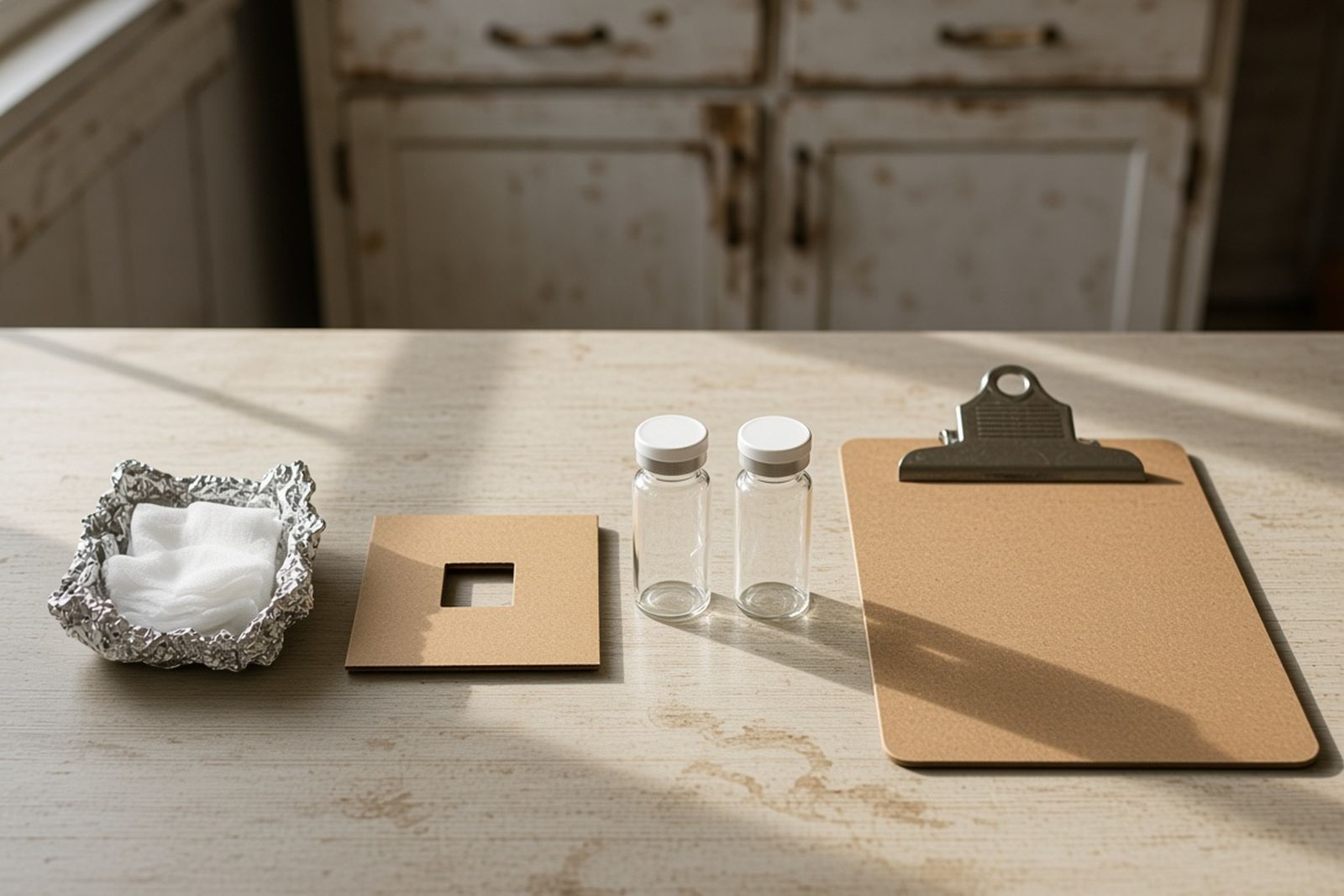
Wipe-sampling supplies on a counter: gauze in foil, a sampling template, vials and a clipboard
Illustrative photo, not a job record. Wipe-sampling supplies on a counter: gauze in foil, a sampling template, vials and a clipboard.
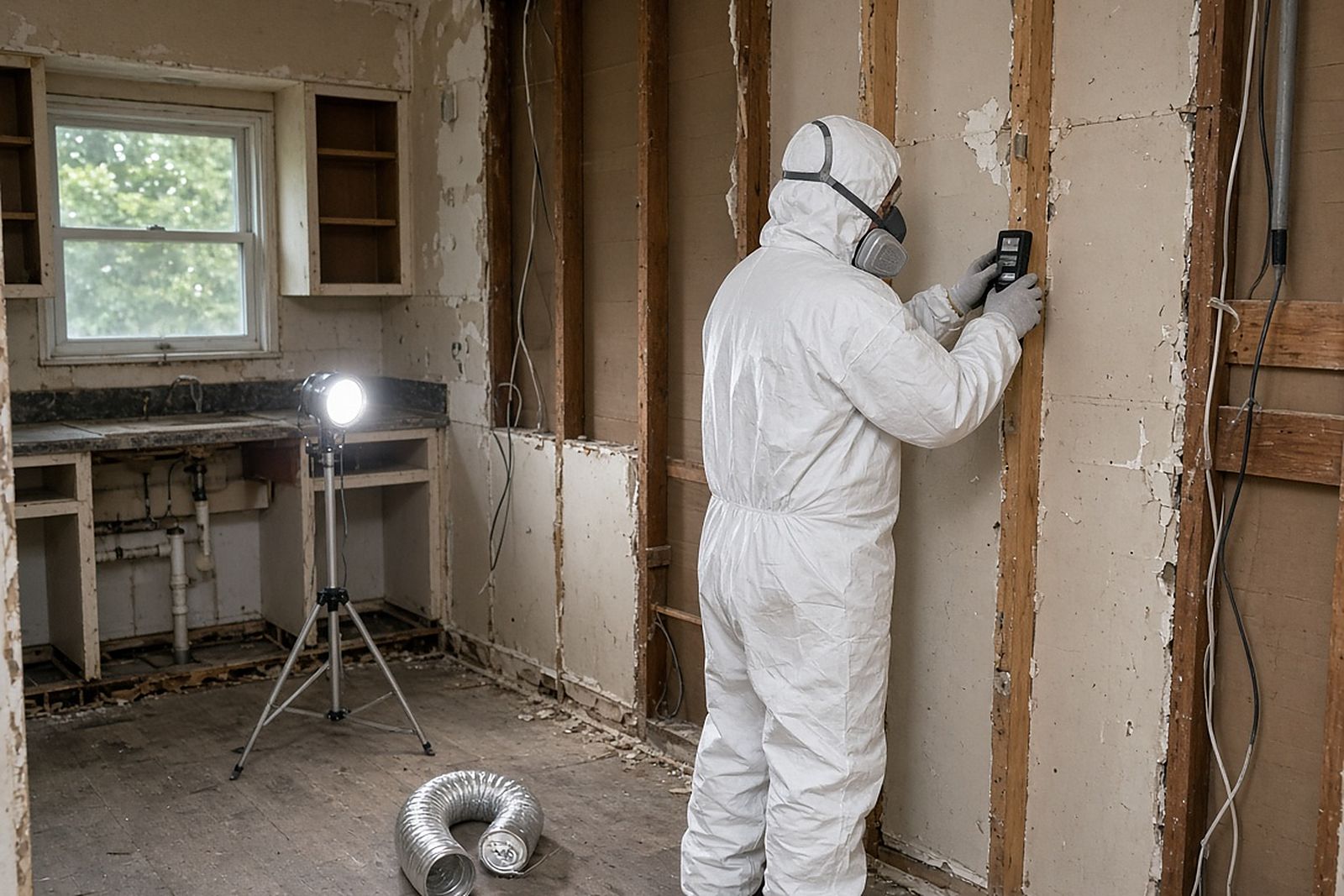
Technician in a respirator checking exposed studs in a gutted kitchen with a work light and duct
Illustrative photo, not a job record. Technician in a respirator checking exposed studs in a gutted kitchen with a work light and duct.

Meth Lab Cleanup figures to keep in mind

National and research figures, not Great Neck data. Local conditions, rules and providers vary; use these for scale and context only.

11.7–26.0 µg/100 cm²

A family of five living in a former meth lab in Victoria, Australia had methamphetamine surface levels of 11.7–26.0 µg/100 cm² in the home, versus the 0.5 µg guideline.

Read with care: A single case report cannot establish typical exposure levels.

Source: CDC MMWR (2016)Single-family case study, rural Victoria, Australia, 2015

1.5 µg/100 cm²

Washington State's methamphetamine decontamination standard is 1.5 µg per 100 cm², which the state says was based on negative health effects found in people.

Read with care: Washington's limit is 15 times higher than the 0.1 µg standard used in several other states.

Source: Washington State Department of Health (2025)Washington State regulation

$6,500 per 1,000 sq ft + $1,400

Ohio's health department reports Oregon experience showing average meth lab cleanup costs of $6,500 per 1,000 square feet plus a $1,400 up-front assessment.

Read with care: Costs are a decade old and vary widely with contamination level and building materials.

Source: Ohio Department of Health (2016)Oregon cleanup experience as summarized by Ohio, document updated June 2016

These figures are public research and agency data, not this network's own job records. Keep each number with its population, year and limits; none of them predicts cost, timing or outcome at a specific property.

Plan before you reach out

Use the first 24 hours planner for immediate steps and the provider vetting checklist to confirm any Great Neck provider's training, insurance and waste path in writing.

What research has found

Findings from published studies of people and properties in situations like this one. They describe what researchers observed in a specific group; they are not predictions for your case.

Inhalation could contribute exposure beyond skin contact and incidental ingestion.
Who was studied: Air sampling and contaminated-material experiments involving two properties.Limits: Limited properties and experimental conditions; modelled exposure is not observed illness.Current practices underestimate environmental exposures to methamphetamine: inhalation e… (2021)
Surface wiping did not measure all contamination within porous materials.
Who was studied: One Australian home with suspected former manufacture, sampled more than five years later.Limits: One property; no general prevalence or current clearance threshold inferred.Contamination of Homes with Methamphetamine: Is Wipe Sampling Adequate to Determine Risk? (2019)

Meth Lab Cleanup community polls

Poll results

Every count is a real visitor vote; nothing is seeded or padded. One vote per poll per device, and you can change your answer.

Your experience

If a house you wanted had a documented lab cleanup that passed clearance, what would you most likely do?

No visitor votes yet
Industry

Which factor would you weigh most when choosing a meth cleanup contractor?

No visitor votes yet

Planning cleanup in Great Neck?

Send a short message about the property to the follow-up inbox. A coordinator can reply by email with next steps.

Your request is sent to the follow-up inbox. A coordinator can reply by email.

If anyone is hurt or in danger, call 911 first.