Short answer
A defensible meth lab cleanup scope is built from sampling data, not guesses. It identifies the governing standard, maps contamination room by room, specifies which materials are removed and which are washed, addresses HVAC and plumbing, defines containment and waste handling, and ends with independent clearance sampling. This fictional example shows how each decision is made and documented.
The setup, and how the problem came to light
The case below is a teaching example. The property, people and results are invented to show how a scope for methamphetamine decontamination comes together. It does not describe a real address or the rules of any particular state, and it should not be read as a template you can copy without checking local requirements.
Anyone facing a real property should ask the state or county drug-lab program which cleanup standard applies, who may sample and remediate, and what paperwork is needed to release the property for occupancy. Where no state program exists, many professionals turn to federal voluntary guidance.
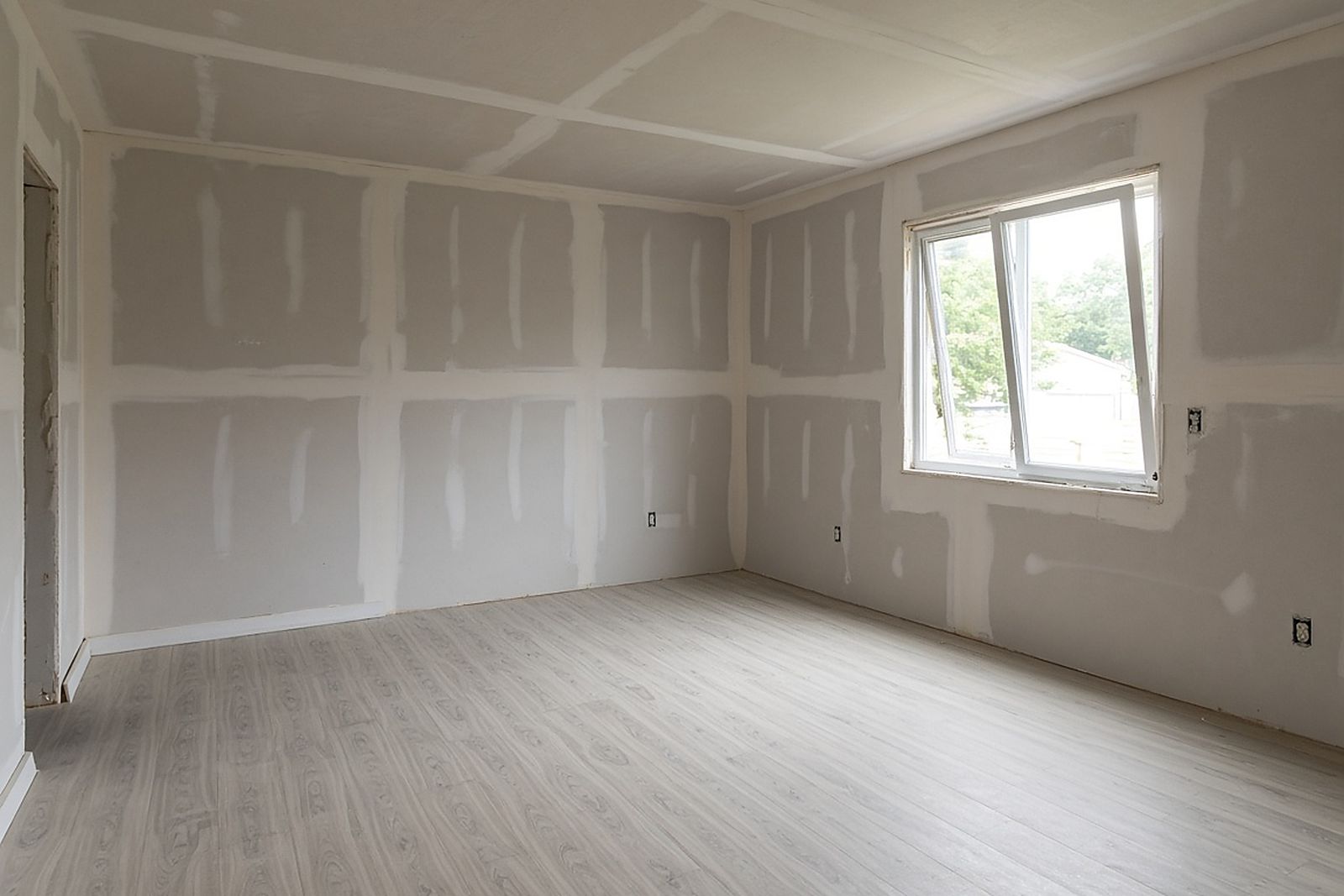
Marcus and Elena are under contract to buy a three-bedroom split-level home that has been vacant for about a year. Their inspector notices unusual staining on the garage ceiling, a patched hole in a bedroom wall where a vent fan may once have been, and corrosion on a laundry sink faucet. The inspector recommends meth screening.
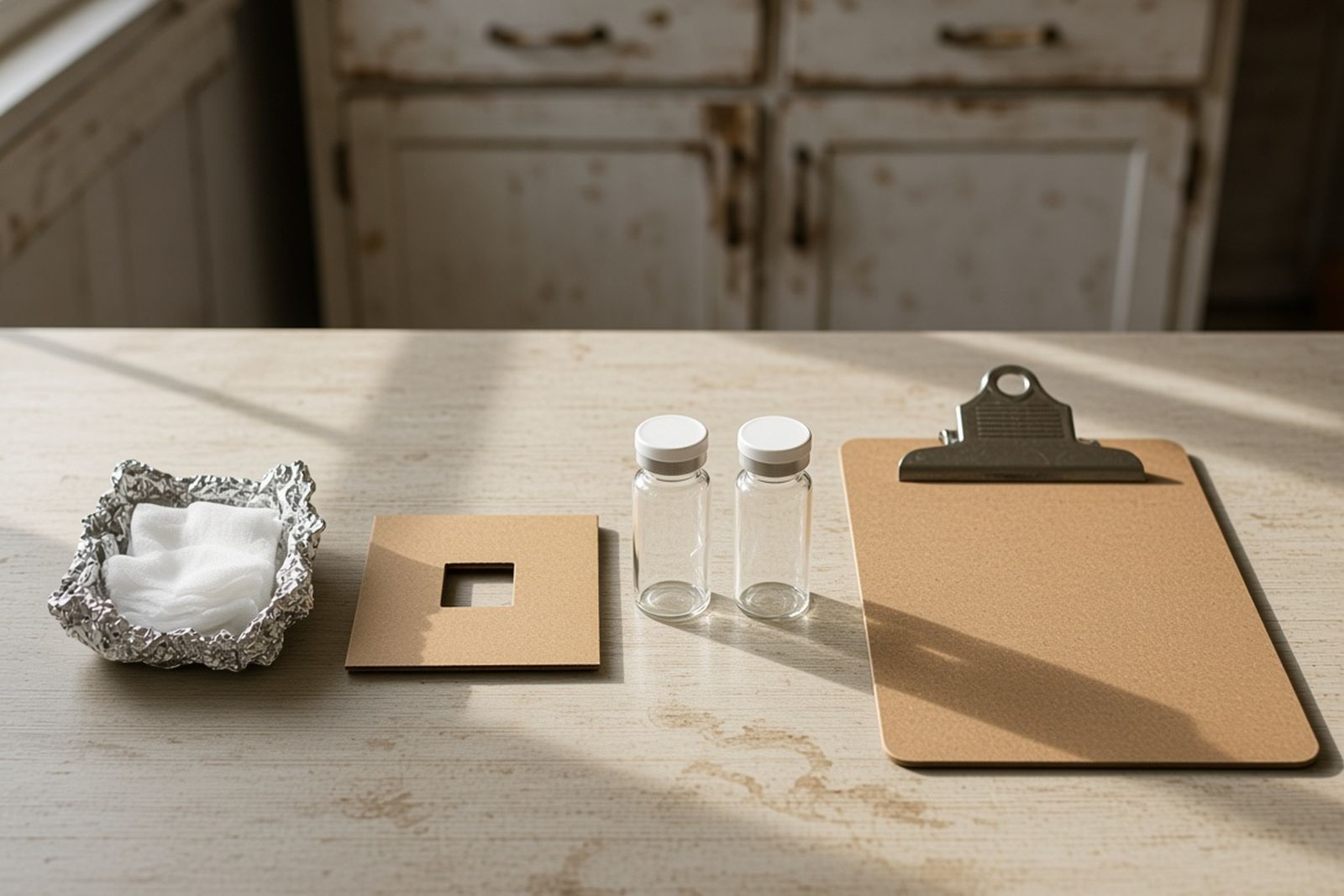
A screening kit gives a positive result in the garage. The buyers' agent checks with the county and learns that the previous owner's tenant was arrested two years earlier on manufacturing charges. The seller, a bank that took the house through foreclosure, says it had no knowledge of the history.
The buyers negotiate an extension of their contract so that full assessment sampling can be completed before closing. That pause turns out to be the most important decision in the entire case.
Assessment sampling results
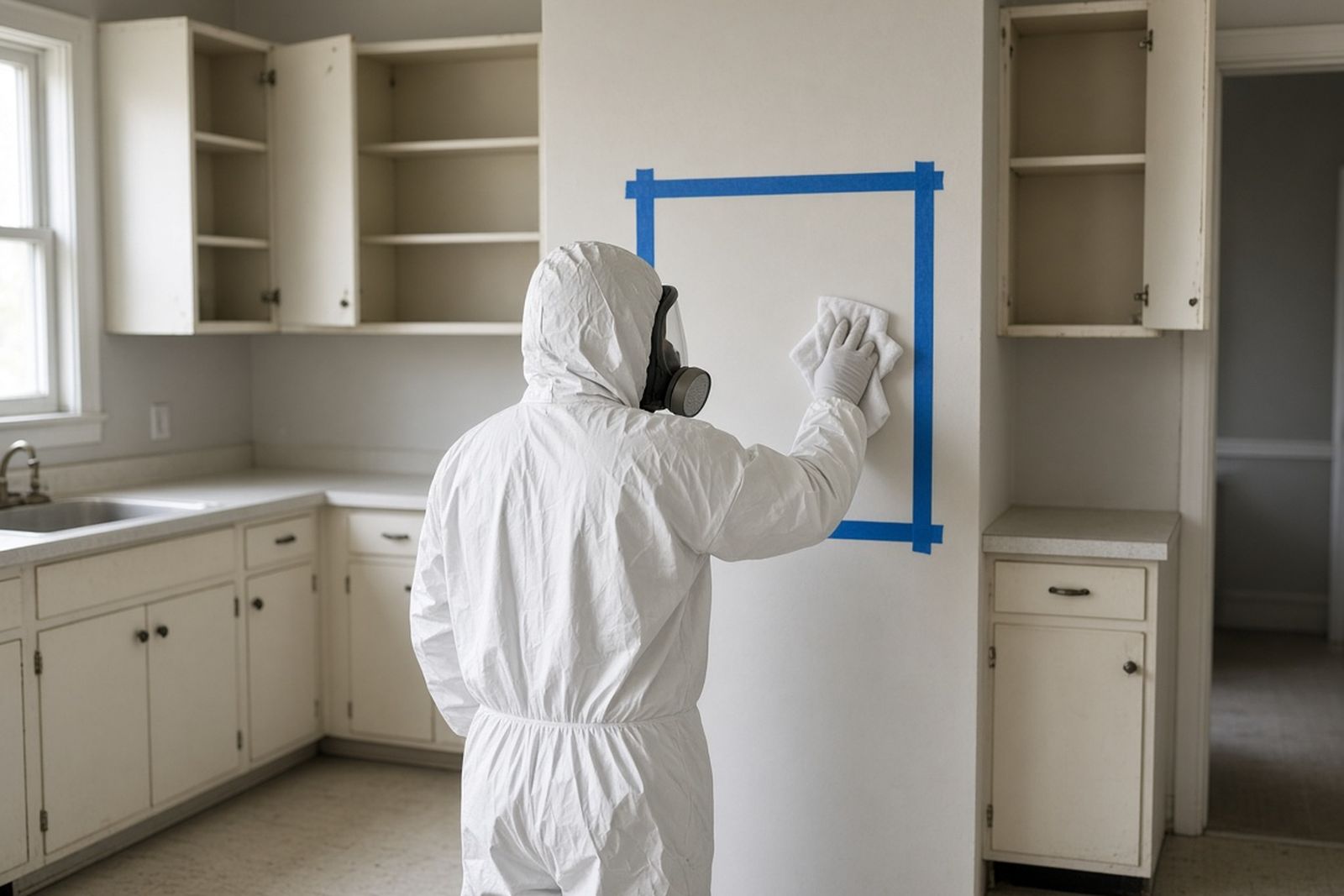
The buyers hire a sampler who holds the qualification their state requires and who has no business relationship with any cleanup contractor. The sampler reviews the arrest report summary, walks the home and designs a sampling plan that covers each room, the garage, HVAC supply registers and return grille, the laundry area and the kitchen.
Results come back from an accredited laboratory. In this fictional state, the cleanup standard is 0.1 µg per 100 cm², a figure that a 2020 NIOSH report describes as the most common state methamphetamine surface cleanup limit based on EPA data. Other states set different numbers; Washington State's Department of Health, for example, lists a higher decontamination standard.
- Garage walls and ceiling: far above the standard, highest in the building.
- Bedroom with the patched vent opening: well above the standard.
- Kitchen and hallway: above the standard.
- Other two bedrooms and living room: modestly above the standard.
- HVAC supply registers: above the standard in every room tested.
- Laundry sink drain area: above the standard, with visible corrosion.
Building the work plan from those results
The sampler's report goes to two remediation contractors, and each prepares a written work plan. The buyers choose the plan that ties every task to a sampling result and explains why a material is being removed or cleaned.
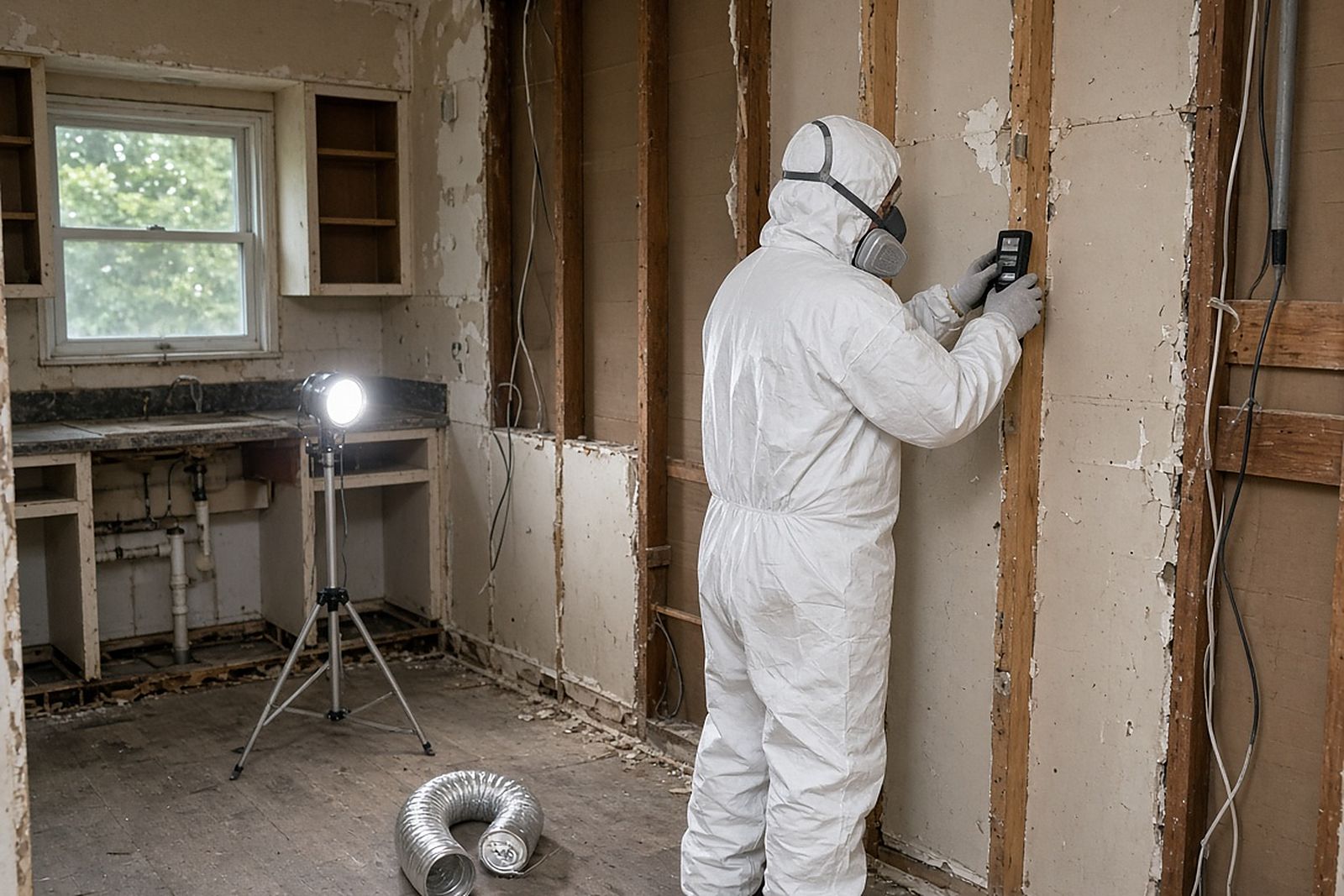
The chosen plan removes all carpet and pad, the garage drywall and ceiling, the drywall in the bedroom with the vent opening, and insulation in the garage ceiling. It calls for HEPA vacuuming and repeated detergent washing of all remaining walls, ceilings, trim, cabinets and hard floors. Ductwork is cleaned where accessible and replaced where it runs through the garage. The furnace's blower and coil are cleaned, and the filter rack is replaced.
The laundry sink, its trap and the corroded faucet are removed and replaced, and the drain line is flushed. The plan notes that septic or soil testing is not included, because the home is on municipal sewer and the county confirms no outdoor dumping was reported, but it flags that finding for the buyers' file.
Containment, worker protection and waste handling
The plan sets up a decontamination area at the garage entrance where workers remove disposable suits, gloves and shoe covers before leaving the work zone. The garage and the bedroom with the highest results are sealed with plastic sheeting and kept under negative air pressure with HEPA-filtered machines exhausting outdoors.
Workers wear respiratory protection selected under the contractor's respiratory protection program, along with eye protection and chemical-resistant gloves. The HVAC system stays off during demolition and washing so residue is not pushed through the house.
The scope also states the washing sequence, top to bottom, and requires fresh cleaning solution and wipes at defined intervals so that residue is removed rather than spread around.
Removed materials are bagged or wrapped inside the containment area, and the outside of each bag is wiped before it leaves. The contractor confirms with the state program and the local landfill how the debris must be classified and transported, and keeps the receipts and any manifests.
Rinse water and used cleaning solutions are handled according to local rules rather than poured onto the ground. The work plan names who is responsible for each waste stream so nothing is left in the driveway after the crew departs.
None of these controls show up in the finished house, which is exactly why they belong in writing. They are the part of the job an owner cannot verify afterward by looking, so the scope and the daily logs are the only proof they happened.
What the scope deliberately left out
A strong scope is as clear about exclusions as it is about tasks. This plan states that it does not include rebuilding: new drywall finishing, paint, flooring and trim are a separate contract that can begin only after clearance. Mixing the two would have tempted someone to paint over surfaces before they were tested.
It also excludes the detached shed behind the house, because the arrest report and the walkthrough gave no indication it was used, and the sampler's screening wipe from the shed came back below the standard. That reasoning is written into the plan so a future reader understands the decision rather than assuming the shed was forgotten.
Finally, the plan notes that personal property is not part of the job. The house is vacant, but a few items left by the former occupant remain in a closet. They are bagged as contaminated debris with the seller's written approval rather than cleaned, since washing personal belongings to a numeric standard is rarely practical.
Each exclusion is a place where a dispute could have started later. Putting them in writing before work begins keeps the buyers, the seller and the contractor working from the same page.
Clearance, closing and what carries over to real cases
When the contractor reports the work complete, the same independent sampler returns. The sampler first does a visual inspection to confirm that all removal was done and that no dust or debris remains. Then clearance wipe samples are collected from the same general locations as the assessment, plus the new drywall in the garage.
Every location passes except the kitchen upper cabinets, which come back slightly above the standard. The contractor rewashes all cabinet surfaces in the kitchen, not just the sampled door, and the sampler returns to resample. The second set passes.
The sampler issues a final report showing the original results, the clearance results, the resample, the laboratory reports and chain-of-custody forms. The state program reviews the documents and removes the property from its list of contaminated sites.
Because the buyers learned about the contamination before closing, they had options. In this example, they negotiate a price reduction reflecting the remediation estimate and agree that the seller will pay for the independent sampling. The contractor is hired by the seller with the buyers' approval of the work plan, and closing happens after the state program's release.
The buyers' file now includes the inspection report, the screening result, the assessment sampling report, both contractors' work plans, the signed contract for the chosen plan, change orders, waste receipts, the clearance and resample reports and the state's release letter. They store paper and digital copies separately.
If they sell the house years from now, they will be able to answer disclosure questions with documents rather than memory, and a future buyer can see exactly what was done.
Pause before committing, whether the commitment is closing on a purchase, re-renting a unit or starting cosmetic repairs. Let independent sampling define the scope, and choose a contractor whose plan connects each task to a result.
Insist on written containment and waste procedures, treat a failed clearance sample as a normal part of the process rather than a disaster, and keep every document. Those habits make the outcome defensible to buyers, lenders, insurers and regulators, and they protect the people who will live in the home next.