Meth Lab Cleanup planning tools
Work through cost, hiring, insurance, first steps and disposal at your own pace.
Dealing with a property that has a meth history means making a string of choices without all the facts. The tools here break that string into pieces you can manage. One helps you see what drives the price of a cleanup, so a quote makes sense. Another gives you a set list of questions to ask a tester or contractor. Others walk you through an insurance claim and the first day after a lab is found. They also cover how removed materials are likely classified and whether a task is safe to do yourself. Each tool is built around the issues of lab and heavy-use homes. These include the heating and cooling ducts, removing soft materials, state clearance rules, and the duty to disclose. That duty follows an owner long after the crew leaves.
Get an email reply about meth lab cleanup
Send a short message to the follow-up inbox. A coordinator can reply by email. This form does not send emergency help; call 911 first if anyone is in danger.
Choose a tool
Every tool runs in your browser. Nothing you enter is stored on our servers, and no tool replaces an on-site assessment, a written scope or your insurer's decision.

Cost Range Estimator
Set the affected area, surface types, severity and extras to see an educational cost range and the factors that move it.
Open tool
Provider Vetting Checklist
Fifteen questions to ask any remediation provider, a readiness score, and a copyable list of what is still unanswered.
Open tool
Insurance Claim Organizer
A guided checklist from finding the policy to tracking the carrier decision, with a printable summary of where the claim stands.
Open tool
First 24 Hours Planner
Tell the planner a few facts about the situation and get an ordered list of who to call, what not to touch, and what to photograph.
Open tool
Waste & Disposal Classifier
Five questions about the material point to the likely waste category and which authority to confirm the rules with.
Open tool
DIY or Call a Pro? Risk Check
Eight yes-or-no questions that produce a risk level and explain when professional help is the safer choice.
Open toolKnowledge quiz
A knowledge check with explanations and a study guide covering hazards, containment, disinfection, waste and documentation.
Take the quizHow these tools fit meth lab cleanup
Every tool gives you something you can act on. It may be a summary, a checklist, or a list of open questions to put in front of an expert. The goal is to make your talks with agencies, contractors, adjusters, and lawyers go faster. It is meant to go with you. Print the summary, paste the open questions into an email, or bring the readiness score to a walkthrough. The tools are for learning. They do not send anything to a provider for you. They do not store personal information. They do not depend on who you end up hiring. You are still the one making the decision, just with better organized facts than before.
Know the limits. No tool on this page can tell you whether residue is present. None can tell you what level your state requires or if a certain contractor is qualified. Cost ranges are for learning. They cannot replace a written quote based on test results. The vetting checklist tells you what to confirm. It does not mean a provider passed. The waste classifier suggests a likely category, and the agency in charge makes the final call. If a tool's result conflicts with what your local health department or a licensed inspector says, follow the expert. Rules vary by state and county. Treat every result as a starting point for checking.
Meth Lab Cleanup numbers worth knowing before you plan
When a property has a drug-lab past, the hardest part is often sorting fear from fact. Owners hear rumors about what residue does, how far it spreads, and what a cleanup costs. Those rumors shape costly choices. The figures in this section come from public health agencies, state environmental programs, and industry reports. They give you a sense of scale. They show how common these finds are and which building materials tend to hold residue. They show what drives cleanup prices and why health concerns focus on certain people who live there. Read them as background for talking with a tester, a cleanup contractor, or a real estate lawyer. They do not replace testing your own building.
- $6,500 per 1,000 sq ft + $1,400
Ohio's health department reports Oregon experience showing average meth lab cleanup costs of $6,500 per 1,000 square feet plus a $1,400 up-front assessment.
Read with care: Costs are a decade old and vary widely with contamination level and building materials.
Source: Ohio Department of Health (2016)Oregon cleanup experience as summarized by Ohio, document updated June 2016
- 5+ years
Researchers found a home where meth was cooked still had 'extremely high' contamination more than five years after production stopped, even after years of later occupancy.
Read with care: One property; persistence depends on materials and any partial cleaning done.
Source: International Journal of Environmental Research and Public Health (2019)Single Australian dwelling case study
- 18 states + DC
As of April 2025, 18 states plus D.C. had no laws at all governing cleanup of properties contaminated by controlled substances.
Read with care: Absence of a law does not mean absence of local health-department orders or seller disclosure duties.
Source: Legislative Analysis and Public Policy Association (2025)All 50 US states, D.C. and territories, research current as of March 2025
- 2009 / 2013 / 2021
EPA's Voluntary Guidelines for Methamphetamine and Fentanyl Laboratory Cleanup were first issued in 2009, revised in 2013 and updated again in August 2021 to add fentanyl.
Read with care: The guidelines are voluntary and set no federal numeric cleanup standard.
Source: US EPA (2021)Federal guidance, United States
These figures are public research and agency data, not this network's own job records. Keep each number with its population, year and limits; none of them predicts cost, timing or outcome at a specific property.
What other visitors decided
Every count is a real visitor vote; nothing is seeded or padded. One vote per poll per device, and you can change your answer.
If a house you wanted had a documented lab cleanup that passed clearance, what would you most likely do?
Which factor would you weigh most when choosing a meth cleanup contractor?
Questions about the meth lab cleanup tools
Which tool should I start with after a lab discovery?
Begin with the First 24 Hours Planner if the lab was found recently. It puts the first steps in order: securing the property, not running the heating and cooling system, and recording conditions. If police have already released the building and you are ready to hire, move to the Provider Vetting Checklist. The Cost Range Estimator is most useful once you have a rough idea of the affected area and materials.
Do the tools account for my state's residue standard?
No tool on this site stores or uses exact state limits. Those numbers and the rules around them change, and they vary from place to place. The tools remind you where a state rule applies. They prompt you to check with the local office. Bring your state's published guidance to any talk with a tester or contractor.
Can I share tool results with a contractor?
Yes, and that is what they are for. You can hand over or email the open-questions list from the vetting checklist. The same goes for the printable summary from the claim organizer. A contractor who welcomes the questions is showing openness. Results are not an inspection. So do not expect a provider to price the job from them alone.
Are results saved between visits?
Tools run in your browser and do not create an account. Some may remember your choices on the same device for ease of use. But nothing is sent to the network or to providers. If you need a lasting record, print or copy the result before you leave the page. Clearing your browser data will erase it.
Why does the DIY tool lean toward calling a professional?
Lab residue can't be seen, spreads on dust, and can fail a clearance test even after surfaces look clean. Trying to remove it without sealing off the area, HEPA filter equipment, and testing can spread it. It can also undercut a later clearance. The tool flags the conditions where those risks are highest, so you can decide with the hazards in view.
Does the insurance tool tell me whether my claim will be paid?
It cannot. Coverage depends on the policy wording, what the policy leaves out, and how the insurer views the cause of loss. The organizer helps you find the policy, give notice on time, record the property's condition, and track the insurer's decision. That way you are ready for whatever happens. Coverage questions belong with your agent, adjuster, or a lawyer.
What if my situation involves both a lab and another hazard?
Properties with a lab history sometimes also have mold, sewage backups, or body-fluid contamination. The tools here focus on chemical residue. Use the matching tools on our related sites for the other hazard. Tell any contractor about every problem, so the work plans can fit together instead of clashing in the same rooms.
More on meth lab cleanup
Meth Lab Cleanup services
See how the inspection, chemical cleanup, duct work, and clearance testing fit together on a former lab or heavy-use home before you hire.
Costs explained
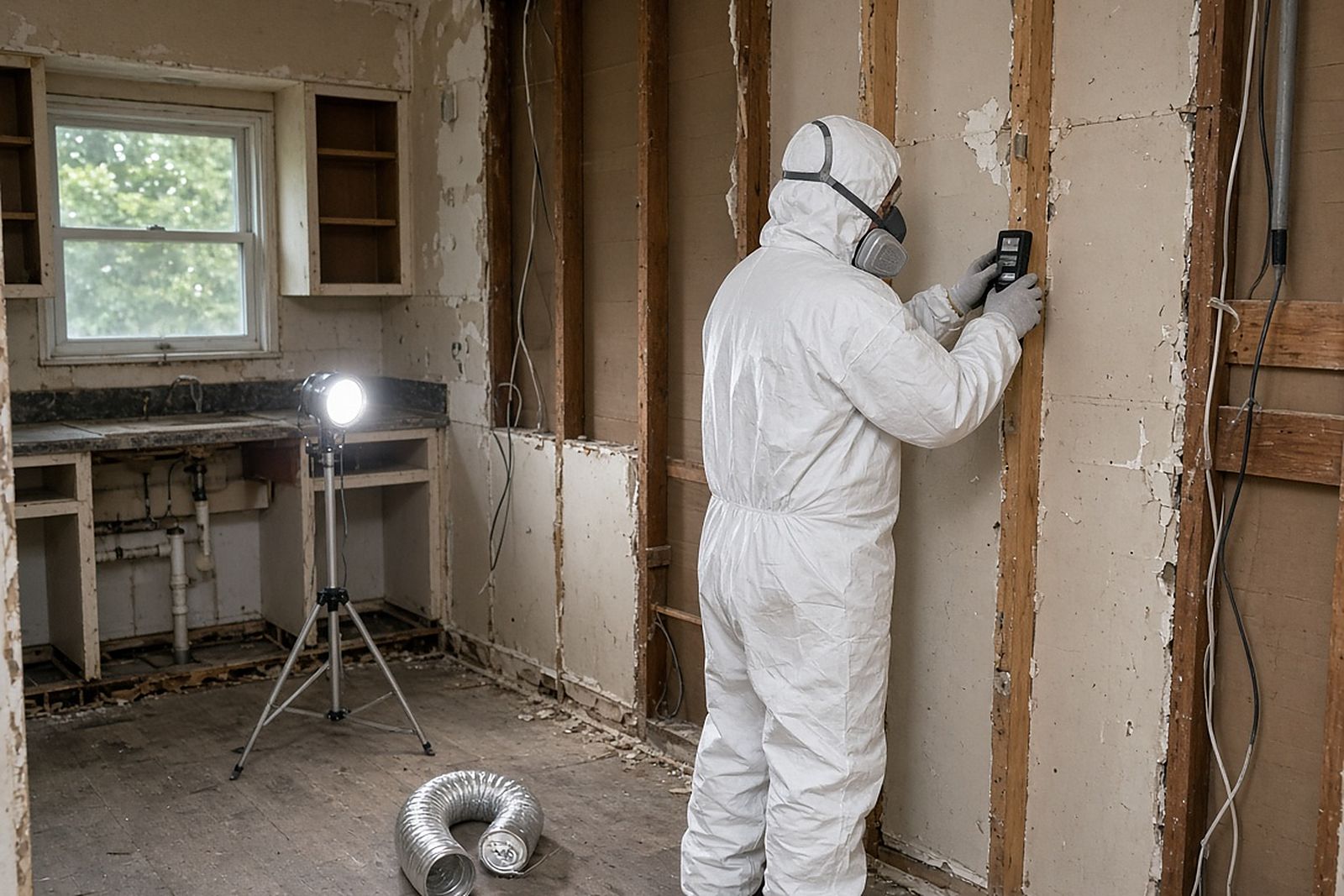
What drives the price, published cost ranges, and how to read a written quote line by line.
Insurance and payment
Which policies may respond, how to document a claim, and what to do if coverage is denied.
Community polls
See how other owners, buyers, and landlords think about disclosure, sampling, and contractor choice, then compare your own view with theirs.
Knowledge quiz
Test what you know before you talk with a provider. Topics include how residue spreads, state programs, sealing off work areas, cleanup steps, waste, and clearance records.
Articles and resources
Read plain explanations of state rule changes, testing questions, disclosure disputes, and lessons from real cleanups across the country.
Field guides
Dig into step-by-step guides on inspections, soft materials, and ducts. They also cover landlord duties and building a strong file for future buyers.
City guides
Find cleanup and testing providers who serve your area. Remember to check every credential directly with the state agency.